

BatStateU KIST Park unveils Ventures Hub to shape the next innovation economy

Batangas State University (BatStateU), the Philippines’ National Engineering University, is taking bold strides toward the future of innovation, research, and industry-academe collaboration with the inauguration of the highly anticipated Knowledge, Innovation and Science Technology (KIST) Park’s Ventures Hub. Launched on June 19, 2025, this innovation space, located within BatStateU’s pioneering KIST Park, is set to transform the local startup ecosystem by turning visionary ideas into thriving ventures. The Ventures Hub offers modular locator spaces tailored to help startups grow and scale up. It empowers industry locators to collaborate, explore ideas, and seize opportunities in partnership with BatStateU. At the Ventures Hub, BatStateU’s commitment to innovation becomes action—delivering on the commitment of From Vision to Ventures. Its focus spans high-impact sectors such as semiconductors, electronics, artificial intelligence, agritech,healthtech, and more—reflecting the university’s commitment to advancing technologies that solve real-world problems. “Through initiatives like the Ventures Hub, we are ensuring that our students, researchers, and entrepreneurs have the tools, resources, and expertise to bring their ideas to life—creating solutions that resonate on a global scale. The Ventures Hub will empower the next generation of tech entrepreneurs and fuel economic growth by turning their visions into thriving businesses that will drive the Philippine economy forward,” shared Dr. Tirso A. Ronquillo, University President and Chief Operating Officer of BatStateU KIST Park, reflecting on KIST Park’s journey from its inception as a vision approved by the Board of Regents in 2016, to its declaration as a PEZA-registered Special Economic Zone in 2020, and now to its current status as it evolves into a reality. Central to the unique value proposition of BatStateU KIST Park is its access to BatStateU’s rich pool of talent, providing startups with world-class expertise, transformative research programs, and a dynamic ecosystem designed to foster innovation. This strategic partnership ensures that ventures can seamlessly transition from research and development to market-ready solutions, enhancing their global competitiveness. The inauguration ceremony kicked off with a ribbon-cutting event, followed by speeches from key stakeholders in the education and tech sectors, including Dr. Marita R. Canapi, Commissioner of the Commission on Higher Education (CHED); Dr. Napoleon K. Juanillo Jr., Assistant Secretary for Technology Transfer, Communications, and Commercialization (TTCC) of DOST; and Dir. Carmela P. Matabang, Regional Director of the Department of Economy, Planning and Development (DEPDev), Region IV-A. They all emphasized the importance of collaboration between industry and academe in advancing the country’s technology and innovation landscape. Startups and industry locators at Ventures Hub recognize the value of being part of an ecosystem where they are not building in isolation, but co-creating alongside researchers, students, and fellow innovators. The Ventures Hub provides the structure and support they need to move quickly, test ideas, and focus on building what truly matters. During the inauguration, existing industry locators, such as Plant Science Philippines Corporation, ParallaxED, TRIOE, Lycan Motorcycles, among others, participated in a unit exhibition showcasing their innovations, capabilities, and active role in shaping the vibrant, collaborative ecosystem within KIST Park. BatStateU KIST Park offers substantial government-backed incentives, including income tax holidays, VAT zero-rating, and streamlined business registration processes. These advantages reduce barriers to innovation, creating an ideal environment for startups to scale and succeed. BatStateU KIST Park, the first PEZA-registered Knowledge, Innovation, Science, and Technology (KIST) Park in the Philippines, is located in Alangilan, Batangas City. It serves as a hub for innovation, research, and industry-academe collaboration, designed to support tech-based startups and innovation-driven industry locators. The park provides purpose-built infrastructure and dynamic spaces like the Ventures Hub to help “Transform Knowledge into Technology.” For additional information about the Philippine’s First KIST visit: https://firstkistpark.com/
BatStateU The NEU climbs in 2025 Times Higher Education Impact Rankings, breaks into 401-600 band globally
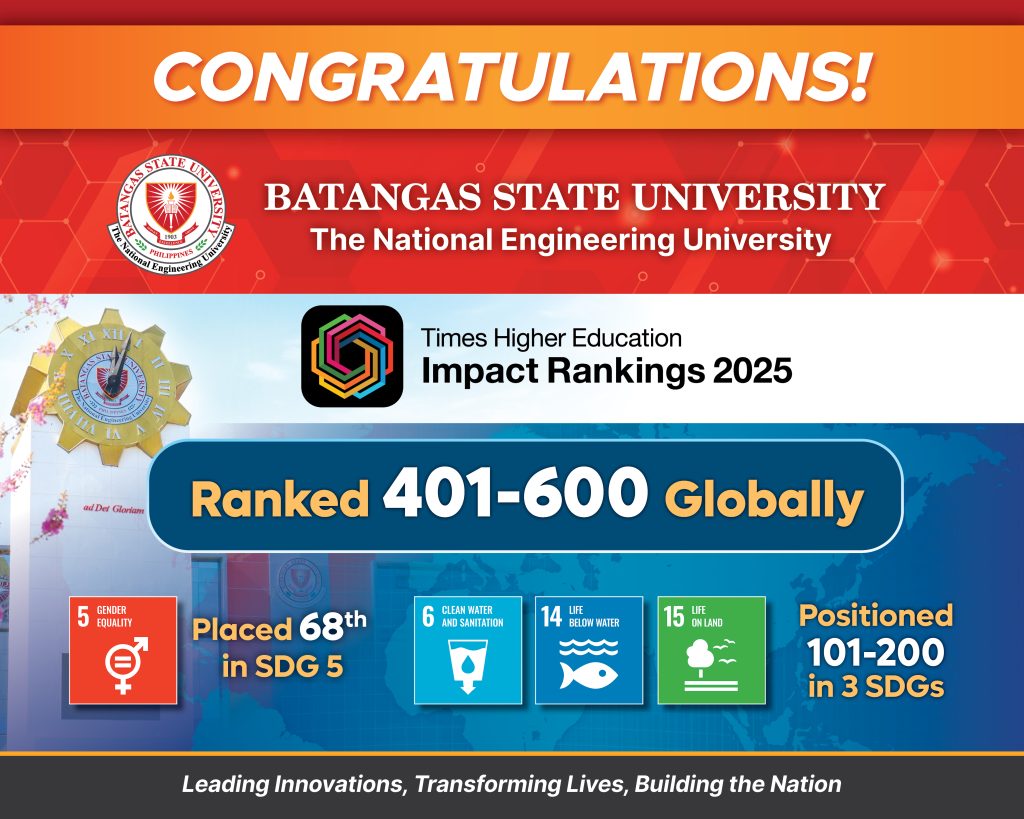
Strengthening its commitment to advancing the United Nations (UN) Sustainable Development Goals (SDGs), Batangas State University, The National Engineering University (BatStateU The NEU), has made a significant leap in the 2025 Times Higher Education (THE) Impact Rankings, rising from the 601–800 band to the 401–600 band out of 2,318 participating universities worldwide, as announced on June 18. Among 113 Philippine (PH) higher education institutions making the list, BatStateU The NEU secured 2nd place nationally—further affirming its leadership in driving SDG-aligned initiatives and championing inclusive, sustainable development. Despite intensified global competition—with 355 additional institutions participating this year—BatStateU not only ascended to a higher bracket but also recorded its highest overall performance score to date: 74.9. This marks a 10.47% increase from the previous year and an impressive 19.65% growth since its inaugural participation in 2023. “BatStateU is honored to be recognized once again by Times Higher Education,” said Dr. Tirso A. Ronquillo, University President. “This achievement reflects the steadfast efforts of our academic community—faculty, staff, students, alumni, and partners—who bring our mission to life every single day. As we continue to elevate our global standing, we remain grounded in our purpose: to engineer meaningful change through inclusive, sustainable, and forward-thinking innovation. My deepest thanks to everyone who walks this journey with us as we strive to build a more resilient and sustainable world,” he added. The THE Impact Rankings represents the first global initiative to assess how universities contribute to the United Nations Sustainable Development Goals (SDGs), evaluating performance across four key areas: research, stewardship, outreach, and teaching. Among the 17 UN SDGs, BatStateU stood out in four key areas, earning placements within the Top 101–200 universities globally, with one SDG breaking into the Top 100. Leading the charge is SDG 5: Gender Equality, where the University ranked 68th out of 1,559 institutions, its highest SDG ranking to date. This achievement was driven by a substantial rise in the percentage of senior female academic leaders—from 34.6 to 72.5—as well as enhanced measures for student access and increased representation of first-generation female students. Equally noteworthy is the University’s performance in SDG 6: Clean Water and Sanitation, where it earned high scores in water usage and care, boosting its overall score to 72.3, a significant leap from 63.3 in 2024. For SDG 14: Life Below Water, BatStateU maintained its strong global standing through consistent efforts in aquatic ecosystem preservation and improved marine-sensitive waste management. Lastly, under SDG 15: Life on Land, the University maintained its upward momentum, achieving a commendable score of 71.0 through expanded environmental education programs and advances in biodiversity research. In addition, the University has also outperformed the global average scores in 9 out of 17 SDGs, including Partnerships for the Goals (SDG 17), which is a mandatory goal for the said ranking. Batangas State University, designated as the Philippines’ National Engineering University through Republic Act No. 11694, is widely recognized for its excellence in engineering education. A Level-IV state university, it has produced over 180 engineering board topnotchers, solidifying its reputation as the country’s largest engineering university. Notably, BatStateU is also a pioneer in quality assurance for engineering education. It is the first state university in the Philippines to have engineering programs accredited by the Philippine Technological Council through its Accreditation and Certification Board for Engineering and Technology (PTC-ACBET). Moreover, it remains the first—and to date, the only—state university in the country with engineering and computing programs accredited by the US-based Accreditation Board for Engineering and Technology (ABET), through both its Engineering Accreditation Commission (EAC) and Computing Accreditation Commission (CAC). With a QS Stars Rating of three stars, BatStateU has also earned global recognition for its commitment to sustainability, ranking as the 304th Most Sustainable University in the 2024 UI GreenMetric World University Rankings. Furthermore, it was also recognized as the 128th most innovative university globally in the prestigious World University Rankings for Innovation (WURI) 2024. At the forefront of these efforts is the University’s Center for Sustainable Development (CSD), which serves as the central hub for advancing BatStateU’s sustainability agenda. Recognizing the urgent need for action in support of national and global sustainability goals, the CSD integrates sustainability across the University’s core functions—instruction, research, innovation, extension, and administrative services. Through active collaboration with students, faculty, staff, and partner communities, the Center fosters a shared responsibility for building a sustainable future. As such, it is envisioned to evolve into a leading platform for transformative action and thought leadership in sustainable development, both locally and globally. For the full rankings and methodology of THE Impact Rankings, detailed information can be accessed at the THE Website. #THEGlobalImpact#THEUniRankings#LeadingInnovations#TransformingLives#BuildingtheNation
BatStateU The NEU attains international recognition as a ‘Tier 1 Institution’ under PTC CASEE, elevating the global standing of Philippine engineering education
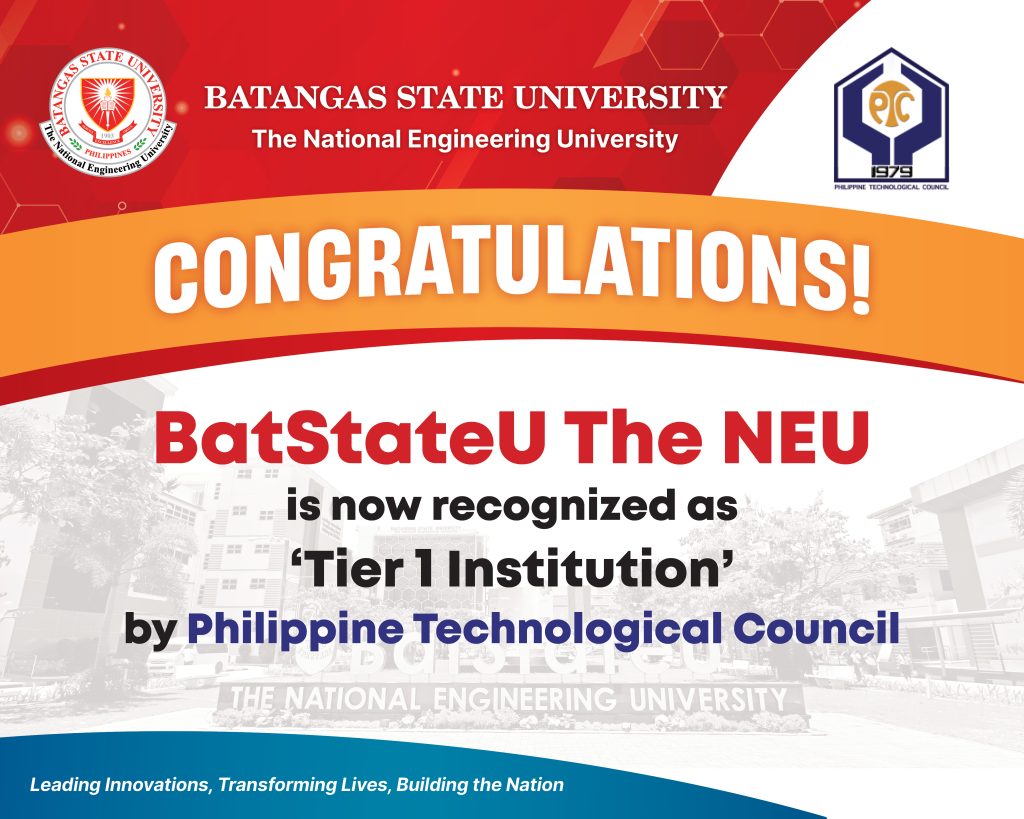
Batangas State University, The National Engineering University (BatStateU The NEU), has been officially recognized as a ‘Tier 1 Institution’ under the Philippine Technological Council (PTC) Tier Classification System (TCS)—a prestigious distinction granted to institutions that demonstrate robust capacity across three key criteria: national/regional impact, leadership and governance, and quality assurance systems for engineering programs. This recognition follows the successful assessment of the University’s Self-Tiering Assessment Report (STAR) under the PTC Certification and Accreditation System for Engineering Education (CASEE). As a Tier 1 institution, BatStateU’s accredited engineering programs are now granted international recognition under the Washington Accord—a global agreement among engineering bodies that upholds substantial equivalency of accreditation systems and qualifications. Furthermore, these programs will be listed in the registry of the Federation of Engineering Institutions of Asia and the Pacific (FEIAP), affirming the University’s commitment to international quality benchmarks in engineering education. The PTC, as the umbrella organization of professional engineering institutions in the Philippines, represents the country in international accords such as the Washington Accord, helping raise the standards of engineering education nationwide. This milestone underscores BatStateU The NEU’s steadfast pursuit of excellence, global competitiveness, and transformative impact as the Philippines’ National Engineering University.
PH engineering students win big at WED Hackathon 2025 in Paris
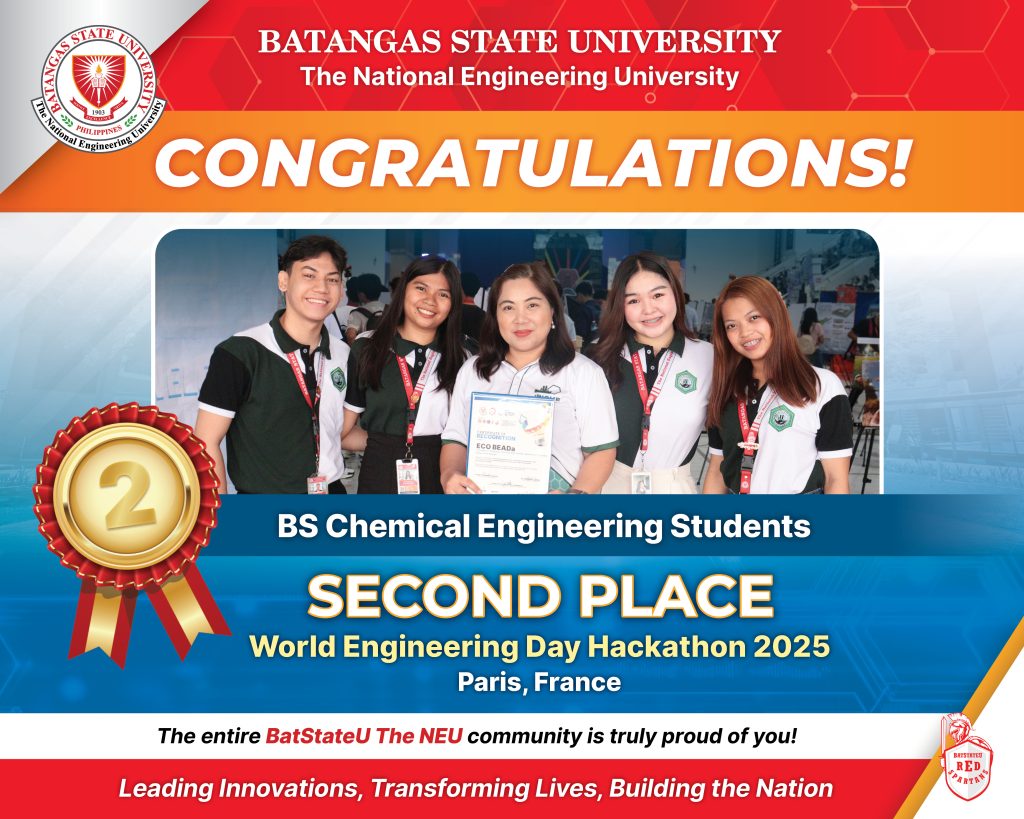
BATANGAS CITY — Batangas State University (BatStateU), the Philippines’ National Engineering University, celebrates a momentous victory of its BS Chemical Engineering students at the World Engineering Day (WED) Hackathon 2025. Team ECO BEADa from BatStateU Alangilan, secured 2nd place in this prestigious global competition, hosted by UNESCO and the World Federation of Engineering Organizations (WFEO) on March 4 in Paris, France. Led by mentor Assoc. Prof. Rhonalyn V. Maulion, the team members Trixie Mae V. Parañaque, Abraham F. Quintia Jr., Krishna Laida L. Sadsad, and Charisse May V. Castillo, bested over 3,000 participants from more than 90 countries, earning global recognition for their groundbreaking solution to address pressing environmental and agricultural challenges in the Philippines. The ECO BEADa project, supported by BatStateU’s Center for Innovation in Engineering Education (CIEE), focuses on the growing crisis faced by Filipino farmers due to water contamination from untreated wastewater. The team introduced an innovative solution using phosphate-absorbing beads made from eelgrass biochar and kaolinite clay — natural, abundant materials that purify wastewater and convert harmful phosphates into eco-friendly fertilizers. This solution aims to revitalize the soil, improve agricultural sustainability, and protect the environment, empowering farmers to combat water contamination, soil depletion, and the broader impacts of climate change. The project not only addresses the immediate agricultural challenges but also promotes long-term sustainability. The team’s solution is designed to be cost-effective and scalable, offering an affordable, community-driven approach to improving water quality and soil fertility in farming communities. With a total treatment cost of just ₱750 per 25 kg of biochar fertilizer, the project provides a sustainable, low-cost alternative to synthetic fertilizers, typically costing up to ₱1,730. “Our success at the WED Hackathon 2025 is a proud moment for BatStateU and for the Philippines,” said University President Dr. Tirso A. Ronquillo. “Team ECO BEADa has shown that through ingenuity and tenacity of Filipino engineers, we can help solve real-world problems and bring lasting positive change to communities, not just in the country but also across the globe,” he added. The project’s approach also aligns with several United Nations Sustainable Development Goals (SDGs), particularly SDG 12 (Responsible Consumption and Production), SDG 13 (Climate Action), and SDG 15 (Life on Land). By addressing phosphate runoff and wastewater contamination, the project contributes to cleaner ecosystems, more sustainable agricultural practices, and a stronger, more resilient environment for farming communities. Additionally, the team has incorporated farmer education programs, including community-based water treatment systems, to ensure long-term success and empower local communities. Themed “Shaping Our Sustainable Future Through Engineering,” the WED Hackathon 2025 attracted brilliant minds from around the world, with participants presenting innovative solutions to some of humanity’s most pressing issues. Team ECO BEADa stood out not only for their technical excellence but also for their commitment to sustainability and community empowerment. In recognition of their outstanding achievement, the team was awarded a €2,000 prize for their impactful contribution to advancing sustainable solutions for a better world. Claiming the top spot, ManufacturingBox from the University of Twente, Netherlands, won first place, while Team Torpedo from the University of Hertfordshire/PSB Academy took third. Furthermore, the People’s Choice Award went to AgriConnect, a collaboration between Ghana and France. For more information about the World Engineering Day Hackathon, please visit this link. About Batangas State University, The National Engineering University Batangas State University (BatStateU), the Philippines’ National Engineering University, by virtue of Republic Act No. 11694, has built a legacy of over 120 years in engineering education excellence. Recognized as the country’s largest engineering university, BatStateU The NEU has produced over 180 engineering board topnotchers, solidifying its reputation for academic distinction. Notably, BatStateU is the first state university with engineering programs accredited by the Philippine Technological Council through its Accreditation and Certification Board for Engineering and Technology (PTC-ACBET), and the first and, thus far, the only state university in the Philippines with engineering and computing programs accredited by the Accreditation Board for Engineering and Technology (ABET) Engineering Accreditation Commission and Computing Accreditation Commission. With a commitment to sustainability, BatStateU has earned global recognition, ranking as the 304th Most Sustainable University in the 2024 UI GreenMetric World University Rankings. Furthermore, BatStateU ranks 128th in the world for innovation according to the 2024 WURI rankings and is placed between 601st-800th globally in the 2024 THE Impact Rankings, covering 2,152 universities across 125 countries.
BatStateU ranks 2nd top-performing school in MELE; 3 grads clinch 3rd, 5th, and 9th places
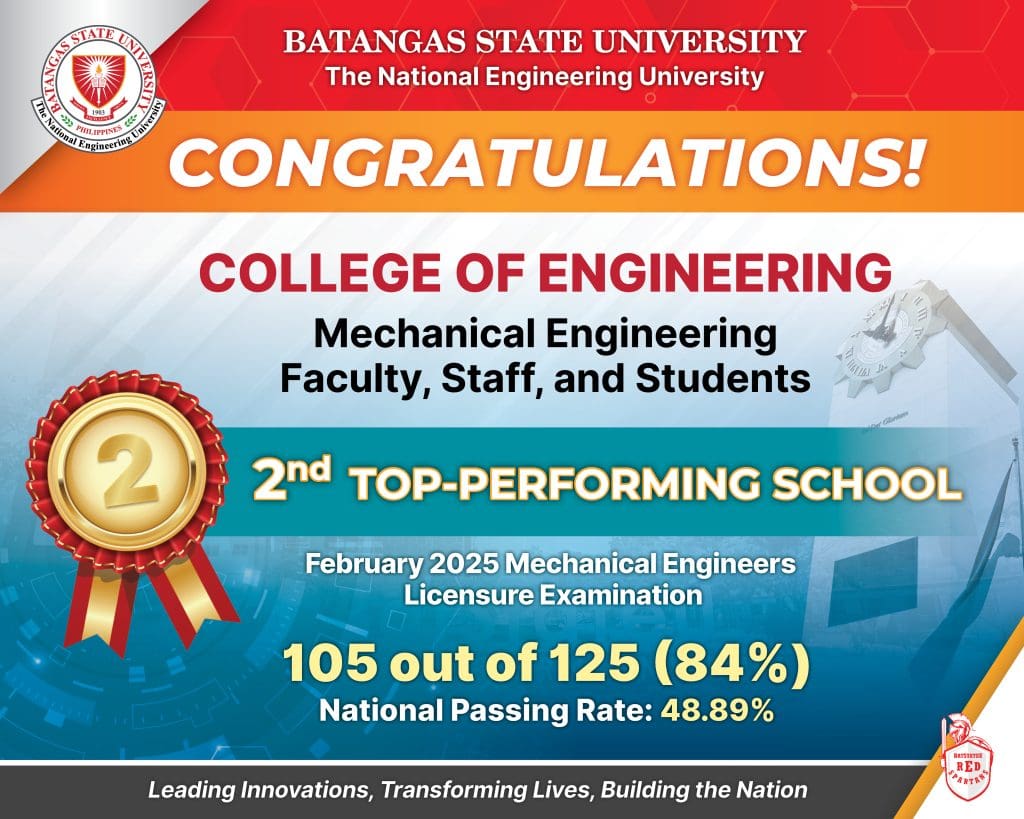
Batangas State University, The National Engineering University (BatStateU The NEU), continues to cement its reputation as one of the leading institutions in engineering education, proudly securing its place as the 2nd top-performing school in the February 2025 Mechanical Engineers Licensure Examination (MELE). With an 84% passing rate, BatStateU far exceeded the national passing rate of 48.89%, producing 105 newly licensed mechanical engineers ready to contribute to the nation’s progress. Showcasing the exceptional talent and dedication nurtured at BatStateU Alangilan, three Red Spartan engineers secured spots in the Top 10 list of the February 2025 MELE. Engr. Jerome M. Igbus earned an impressive 3rd place with a rating of 91.30%, followed by Engr. Giann Dominic D. Manalo, who ranked 5th with a 90.05% rating, and Engr. Ziddney A. Jandusay, who claimed 9th place with an 89.10% rating. These remarkable achievements were officially announced by the Professional Regulation Commission (PRC), which confirmed that 3,089 out of 6,318 examinees successfully passed the licensure exam. The MELE was conducted from February 17 to 19, 2025, across multiple testing centers in NCR, Baguio, Cagayan de Oro, Cebu, Davao, Iloilo, Legazpi, Lucena, Pampanga, Rosales, Tacloban, and Zamboanga. In his message of congratulations, BatStateU President Dr. Tirso A. Ronquillo lauded the new mechanical engineers and the faculty members who played a vital role in their success. “This achievement reflects the standard of engineering excellence that BatStateU The NEU consistently upholds. Our Red Spartans continue to prove that with determination, skill, and vision, they can lead the way in engineering the future. As the Philippines’ National Engineering University, we remain steadfast in our mandate to produce engineers who are not only globally competent but also deeply committed to nation-building,” he stated. #LeadingInnovations#TransformingLives#BuildingtheNation#ZitoRedSpartans
BatStateU and PTC forge partnership for the future of engineering education in the Philippines
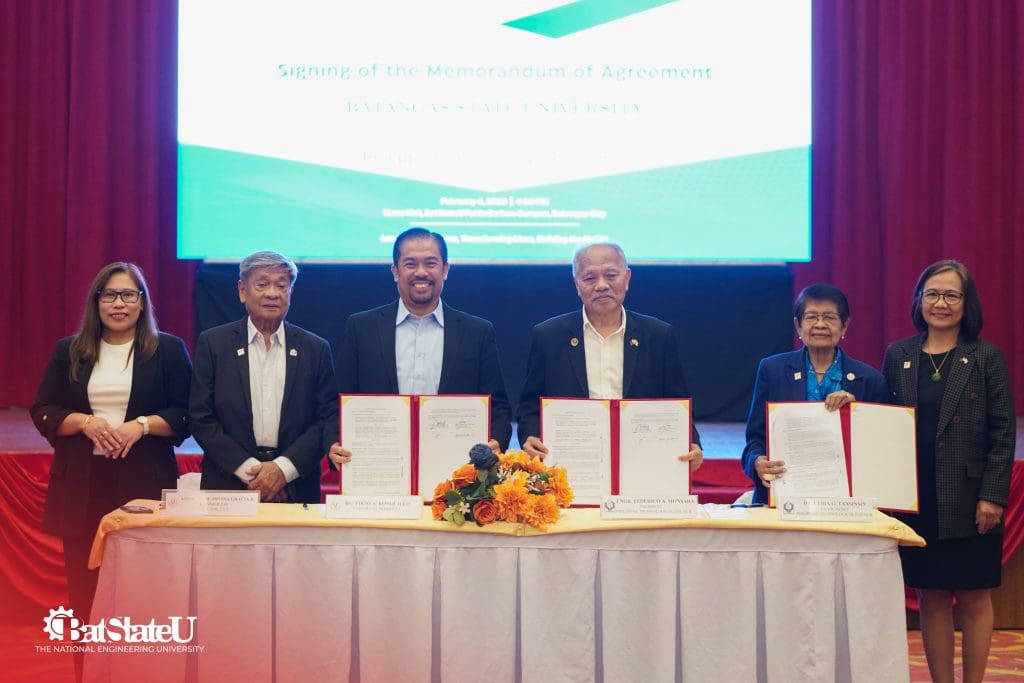
Batangas State University, The National Engineering University (BatStateU The NEU), solidified its commitment to advancing engineering education in the country through a strategic partnership with the Philippine Technological Council (PTC). On February 4, 2025, a Memorandum of Agreement (MOA) was signed at Narra Hall, Jose Rizal Building, BatStateU Pablo Borbon Campus, marking a significant milestone in the implementation of the country’s National Engineering Education Development (NEED) Program. This collaboration unfolded during the ongoing Outcome-Based Engineering Education (OBEE) National Training Series for Engineering Deans and Program Chairs Part Two, which convened 65 engineering deans and program chairs from across the country. The initiative aims to drive transformative change in engineering education by equipping academic leaders with the necessary skills and knowledge to implement OBEE within their respective institutions. As the Philippines continues to align with global engineering education standards as a full signatory of the Washington Accord, BatStateU and PTC are at the forefront of ensuring the quality and competitiveness of Filipino engineers. The NEED Program is structured into six components, which include profiling engineering education in the country, outcome-based engineering education, curriculum development, faculty training, accreditation readiness, and strengthening collaborative research in engineering. Spearheaded under the Center for Innovation in Engineering Education – CIEE, the program was officially launched by BatStateU in May 2024 during the 2nd International Conference on Innovations in Engineering Education (ICIEE). Under the signed MOA, PTC will be a key partner in implementing the NEED Program, providing expertise guidance, accreditation frameworks, and industry linkages to ensure global competitiveness. BatStateU President Dr. Tirso A. Ronquillo, ASEAN Eng., in his welcome remarks, emphasized the university’s responsibility as the country’s National Engineering University in shaping the future of engineering education. “Through this collaboration with PTC, we are shaping a new generation of engineers who will lead innovations, address global challenges, and drive national development,” Dr. Ronquillo said. During his message of commitment, PTC President Engr. Federico A. Monsada, MEng, ASEAN Eng., Hon. FAFEO, emphasized the council’s dedication to ensuring the highest standards in engineering education. “The objectives of the NEED Program are aligned with what PTC would like to see with the engineering community in the Philippines—we would like to see graduates leveling up to international standards and exemplars which are being spoused by the international engineering alliance,” he stated. With BatStateU and PTC leading the charge, the Philippines moves closer to producing world-class engineers who are equipped with the knowledge, skills, and competencies to lead national development and advance the engineering profession globally. Established in 1978, the PTC is the umbrella organization of 13 professional engineering organizations in the country, each representing a specific field of engineering practice. As the official accrediting body for engineering education and professional practice, PTC is dedicated to fostering interdisciplinary collaboration, promoting global competitiveness, and advancing engineering expertise to drive socio-economic development.
BatStateU The NEU dominates August 2024 MELE and CPMLE as Top Performing School with 6 topnotchers
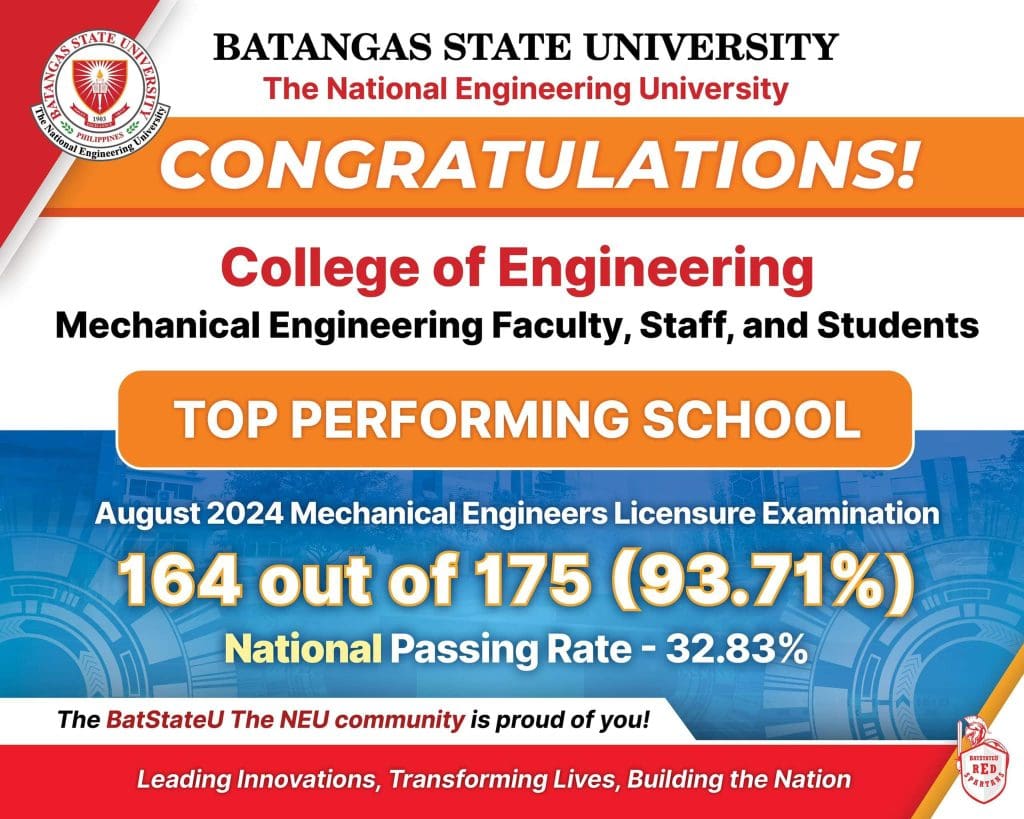
Continuing to uphold its legacy of engineering excellence, Batangas State University, The National Engineering University (BatStateU The NEU) has once again emerged as the top-performing school in the August 2024 Mechanical Engineer Licensure Examination (MELE). With an outstanding passing rate of 93.71%, the university produced 164 newly licensed mechanical engineers. This achievement is further highlighted by the exceptional performance of four Red Spartans who secured top positions in the licensure exam. Out of 3,485 examinees nationwide, Carl Geoffrey Del Mundo Sanchez ranked 2nd with a score of 90.20%, followed by Arvin Lemuel Cantos Freo in 4th place with 89.10%, Darius Angelo Ascaño Libao in 5th with 88.95%, and Sofia Clarin Hernandez in 7th with a rating of 88.20%. All are BS Mechanical Engineering graduates from BatStateU Alangilan. Parallel to this, Raymund Fabregas Faderon and Rene Casao Deliso achieved notable success in the Certified Plant Mechanic Licensure Examination (CPMLE), attaining the 4th and 5th top spots with scores of 80.75% and 80.45%, respectively. “This achievement demonstrates BatStateU’s dedication to producing world-class engineers who are not only technically proficient but also equipped to lead and innovate. Our students’ success speaks to the unparalleled quality of their education and training. True to our mandate, BatStateU continues to produce world-class engineers, ready to build the nation,” expressed BatStateU The NEU President Dr. Tirso A. Ronquillo. BatStateU’s remarkable performance in the MELE 2024 reasserts its reputation as a premier institution dedicated to shaping the future of engineering in the Philippines and beyond.
BatStateU The NEU remains strong in the 2024 Times Higher Education Impact Rankings
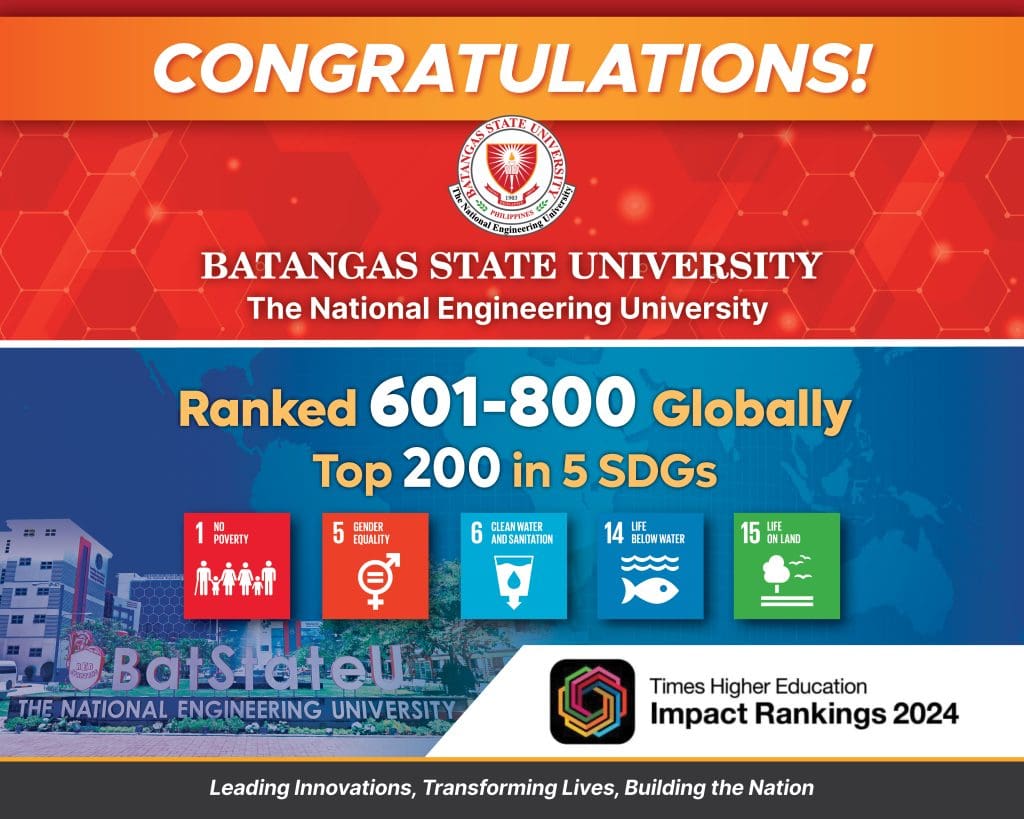
Consistent with its commitment to engineer a SDG and future-oriented Red Spartan community, Batangas State University, The National Engineering University (BatStateU The NEU), maintained its position within the 601st-800th range among 2,152 universities from 125 countries/regions in the Times Higher Education (THE) Impact Rankings 2024, released on June 12. In its second year of participation, the University recorded an 8.31% increase in its overall score compared to the previous year. Additionally, out of the 17 Sustainable Development Goals (SDGs), BatStateU The NEU showed significant improvement in 15 SDGs compared to the 2023 results while maintaining strong performance in the remaining two. Notably, the University’s SDG initiatives have seen a substantial rise in global rankings, with five initiatives now in the Top 200, compared to just one last year. These top-ranked initiatives include No Poverty, Gender Equality, Clean Water and Sanitation, Life Below Water, and Life on Land, the latter of which saw a remarkable 70% increase in its score from its 2023 performance. The University was ranked in all 17 SGDs thereby affirming its strong and comprehensive commitment in contributing to the achievement of the global goals. “Beyond the rankings, the University should be especially proud of the increase in scores for overall performance and individual SDGs. This achievement reflects our deliberate efforts to integrate sustainability into all our programs, activities, projects, and policies. With more sustainability initiatives in the pipeline, we anticipate making even greater contributions in the coming years”, said Dr. Tirso A. Ronquillo, BatStateU The NEU President. “I would like to express my thanks and appreciation to the entire academic community for their cooperation and sincere commitment to achieving global goals for sustainable development”, he added. The 2024 THE Impact Rankings assessed universities’ contributions to the United Nations Sustainable Development Goals (SDGs), with 56 Philippine universities making the list. Batangas State University is the Philippines’ National Engineering University by virtue of Republic Act No. 11694; renowned for its engineering education excellence, this Level-IV state university has produced over 180 engineering board topnotchers, cementing its position as the country’s largest engineering university. Notably, BatStateU is the first state university with engineering programs accredited by the Philippine Technological Council through its Accreditation and Certification Board for Engineering and Technology (PTC-ACBET), and the first and, thus far, the only state university in the Philippines with engineering and computing programs accredited by the Accreditation Board for Engineering and Technology (ABET) Engineering Accreditation Commission and Computing Accreditation Commission. Batangas State University. (BatStateU) has earned three stars in the QS Stars Rating. Furthermore, it was ranked as the 300th World’s Most Sustainable University in the 2023 UI GreenMetric World University Rankings and is also recognized as the 128th most innovative University globally in the prestigious World University Rankings for Innovation (WURI) 2024. For the full rankings and methodology of THE Impact Rankings, detailed information can be accessed at the THE Website: https://www.timeshighereducation.com/impactrankings#!/length/25/locations/PHL/sort_by/rank/sort_order/asc
BatStateU The NEU launches the Philippines’ NEED program to redefine the future of engineering education
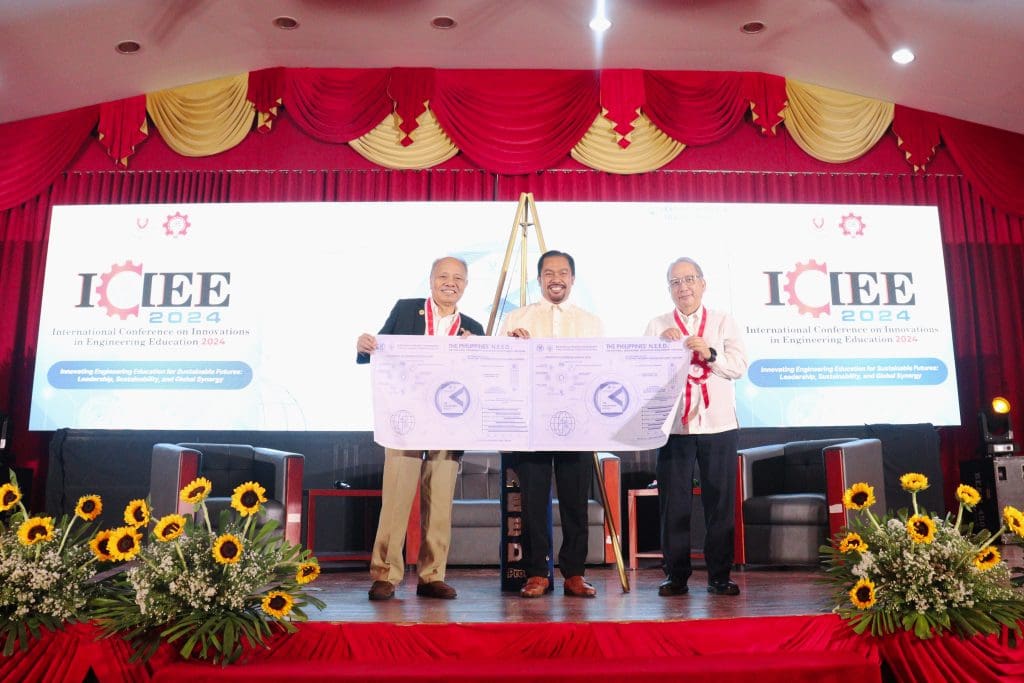
BATANGAS CITY – On May 8, Batangas State University, The National Engineering University (BatStateU The NEU) launched the Philippines’ National Engineering Education Development (NEED) Program, marking a transformative step forward in the advancement of engineering education in the Philippines. Positioned to significantly contribute to the development of highly skilled engineers and professionals who will drive the nation’s progress and prosperity, the NEED Program was officially introduced at the International Conference on Innovations in Engineering Education (ICIEE) 2024. Propelled by the Center for Innovation in Engineering Education (CIEE), the NEED Program is designed to achieve several outcomes by 2027. These include providing an understanding of the landscape of Philippine Engineering Education, advancing towards a truly Outcomes-Based Engineering Education, supporting the elevation of national accreditation standards, redefining the curricula that meets industry demands, and building sustainable local and global academe-industry networks. Correlated with this, the NEED program aims to comprehensively enhance engineering education in the Philippines by focusing on six essential components. Initially, it profiles the landscape of engineering education, assessing and refining elements such as curriculum, delivery systems, infrastructure, employability, and industry linkages. It also strengthens outcomes-based engineering education nationwide, offering extensive training for deans and chairs on outcomes-based teaching, learning, and assessment (OB-TLA), curriculum mapping, integration strategies, the CDIO Framework, and engineering education for sustainable development (EESD). Further, it accelerates engineering program accreditation, enhancing participation and compliance among Higher Education Institutions (HEIs) with improved local accreditation standards, mentoring deans and chairs in ABET criteria through the Professional Regulation Commission (PTC), and organizing the National Conference on Quality Assurance in Engineering Education. Moreover, it also re-engineers the curriculum by developing industry-aligned courses through collaborative efforts involving government, universities, and industry. Another critical aim is to boost faculty excellence, enhancing their expertise to elevate Philippine HEIs as global centers of engineering education and research excellence. Lastly, the program enhances engineering research collaboration, increasing research visibility, fostering global engagement, and enhancing scholarly impact. Set under the theme “Innovating Engineering Education for Sustainable Futures: Leadership, Sustainability, and Global Synergy,” the ICIEE 2024 was poised to transform engineering education. This event featured innovative hybrid and experiential learning sessions that expanded the boundaries of educational strategies and integrated emerging technologies. Discussions delved into the latest trends and methodologies, making ICIEE 2024 an essential platform for advancing engineering education to adeptly respond to contemporary global challenges. “Let this conference serve not only as a platform for discussion but as a catalyst for substantial and sustainable change in the way we educate our future engineers. Together, let us enhance our curricula, strengthen our teaching methodologies, and forge partnerships that extend beyond our local frameworks to achieve a global impact”, remarked University President Dr. Tirso A. Ronquillo in his welcome message, emphasizing the importance of collective action to elevate the engineering education in the Philippines. Characterized by insightful discussions and expert perspectives, the conference unfolded with a compelling keynote from Em. Prof. Elizabeth Taylor, the Chair of Governing Group and Deputy Chair of Sydney Accord. She highlighted the vital role of the International Engineering Alliance (IEA) in advancing the 2030 Agenda for Sustainable Development through the strategic use of the IEA Graduate Attributes and Professional Competencies (GAPC) Framework. This set the stage for a series of enriching discussions led by experts, showcasing the transformative capabilities of engineering education. Additionally, the event included a significant Memorandum of Understanding (MoU) Signing Ceremony between BatStateU The NEU, and Taylor’s University, Malaysia’s top private university based on the QS World University Ranking 2021. The MoU intends to foster research partnerships, facilitate student and faculty exchanges, promote academic collaboration, offer joint supervision for postgraduate students, and support the establishment and publication of CIEE’s engineering education journal. Assoc. Prof. Dr. Abdulkareem Sh. Mahdi Al-Obaidi represented Taylor’s University at the ceremony. In the engaging panel discussion “Positioning the Philippines in the Global Engineering Education Landscape,” moderated by Dr. Tirso A. Ronquillo, distinguished experts delivered impactful reflections. Dr. Ramiro Jordan P.E., Vice President for Resource Generation at the International Federation of Engineering Education Societies (IFEES), provided a comprehensive global perspective via virtual participation. Meanwhile, Dr. Reynaldo B. Vea, Past President of Mapúa University, Chairman and CEO of iPeople, Inc., and Engr. Federico A. Monsada, President of the Philippine Technological Council (PTC), shared their invaluable expertise and experiences. Their contributions deepened the conversation with actionable insights and forward-thinking strategies, emphasizing the Philippines’ evolving role in international engineering education. Participated by engineering education leaders from various schools across the country, the conference will be until May 10, 2024, offering a rich program of plenary talks, panel discussions, and interactive workshops from Filipino engineering leaders and global thought leaders and pioneers from the International Engineering Alliance, World Federation of Engineering Organizations, International Federation of Engineering Education Societies, American Society of Engineering Education, Australasian Association of Engineering Education, Accrediting Board for Engineering and Technology, and conference partners the University of Teknologi Malaysia, Taylors University, and Singapore Polytechnic. For more information about the ICIEE 2024: https://batstateu.edu.ph/ciee/iciee-2024/ Batangas State University is the Philippines’ National Engineering University by virtue of Republic Act No. 11694; renowned for its engineering education excellence, this Level-IV state university has produced over 180 engineering board topnotchers, cementing its position as the country’s largest engineering university. Notably, BatStateU is the first state university with engineering programs accredited by the Philippine Technological Council through its Accreditation and Certification Board for Engineering and Technology (PTC-ACBET), and the first and, thus far, the only state university in the Philippines with engineering and computing programs accredited by the Accreditation Board for Engineering and Technology (ABET) Engineering Accreditation Commission and Computing Accreditation Commission. Batangas State University. (BatStateU) has earned three stars in the QS Stars Rating. Furthermore, it was ranked as the 300th World’s Most Sustainable University in the 2023 UI GreenMetric World University Rankings and is also recognized as the 90th most innovative University globally in the prestigious World University Rankings for Innovation (WURI) 2023 and secured a notable ranking between 601st-800th among 1,591 universities from 112 countries/regions in the THE Impact Rankings
Filipino engineering students from BatStateU secure 3rd place in the World Engineering Day Hackathon
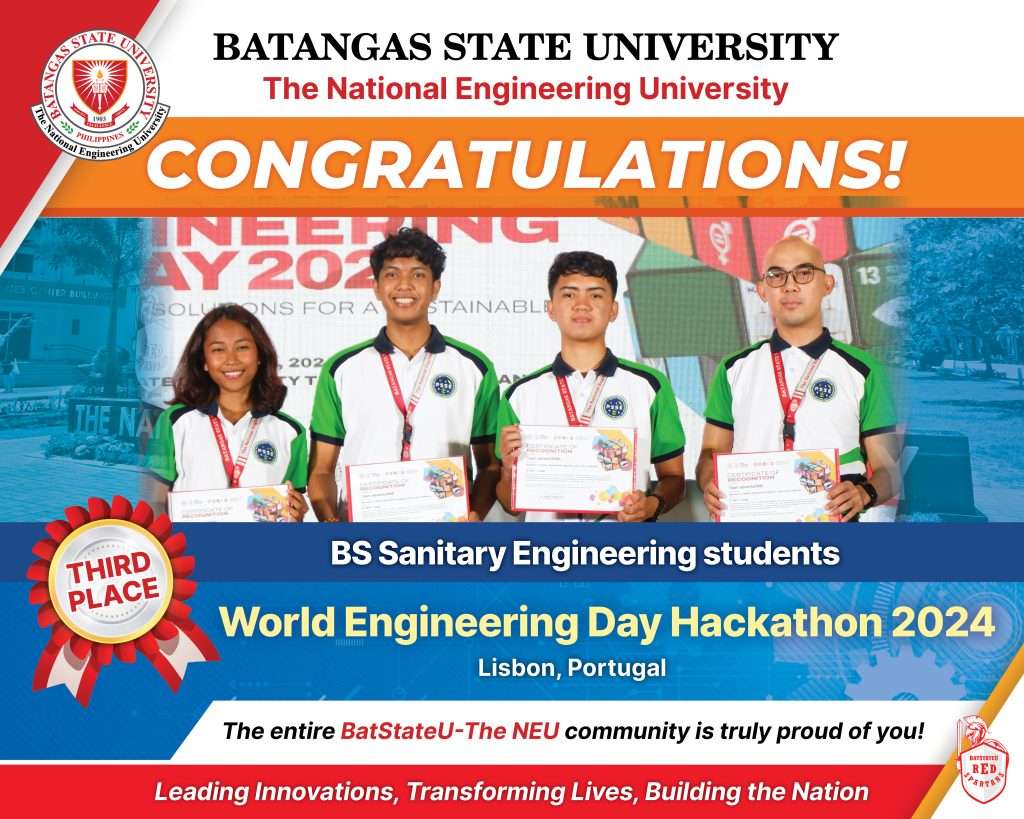
Batangas State University, The National Engineering University (BatStateU), proudly announces the remarkable achievement of its BS Sanitary Engineering students at the World Engineering Day (WED) Hackathon on March 4. Amidst fierce competition from engineering talents worldwide, Team AdventURINE from BatStateU Alangilan Campus secured 3rd place, raising the flag of the Philippines high on the global stage. The winners were broadcast during a 24-hour global stream hosted by emcees in Australia and Lisbon, Portugal, substantially boosting the international acknowledgment of their impressive feat. Organized annually by UNESCO, in collaboration with Engineers Without Borders International (EWB-I) and The Big Creative, the WED Hackathon represents a global initiative for cooperation and innovation in engineering. With over 2,500 students from more than 35 countries participating, this year focuses on Climate Action, resonating with Sustainable Development Goal 12. The challenges were designed to stimulate inventive solutions to some of the world’s most pressing environmental issues. Team AdventURINE, led by Jose Luis A. Valencia, Nathaniel M. Regodon, and Maureen H. Fadullo, and guided by their mentor Dr. Mark Sibag, showcased their innovative design, “Green Sustainable Phyto-fence Assembled using Cured Source-collected Urine for Urban Environmental Balance (SPACE).” Their solution, a sustainable phyto-fence constructed from treated source-collected urine, addresses Challenge 3: Protecting the Most Vulnerable from Extreme Heat in Refugee Camps and Temporary Shelters. Their project ingeniously addresses the vital need for cooling in temporary settlements and improving hygiene and sanitation. By encouraging the use of designated urinals and treating collected urine for microalgae cultivation, they create a closed-loop system that promotes both urban living needs and ecological balance. Significantly, this solution is powered entirely by solar energy, reducing dependence on fossil fuels and enhancing climate-friendly initiatives. Through their approach, Team AdventURINE demonstrates the power of innovation to address complex challenges while prioritizing sustainability and environmental stewardship. “The dedication and creativity exhibited by Team AdventURINE exemplify the spirit of innovation and problem-solving that we strive to cultivate at Batangas State University,” remarked BatStateU President Dr. Tirso A. Ronquillo. “Their success on the global stage upholds our commitment to nurturing excellence in engineering education and research,” he added. As a mark of their exemplary achievement, Team AdventURINE was awarded a prize of €1,000, acknowledging their impactful work in advancing sustainable solutions for a better world. Following closely behind, Team EcoCool, comprising scholars from Hong Kong University of Science and Technology, University of Illinois Urbana-Champaign, Tokyo Institute of Technology, and Rice University (US), secured second place. Meanwhile, Team Somiant from Yachay Tech University, Ecuador, claimed the top position. Batangas State University warmly congratulates Team AdventURINE for their peerless performance at the WED Hackathon 2024, bringing glory to the institution and the Philippines and highlighting the country’s growing influence in global engineering innovation. For more information about the World Engineering Day Hackathon, please visit: https://worldengineeringday.net/hackathon/ Batangas State University is the Philippines’ National Engineering University by virtue of Republic Act No. 11694; renowned for its engineering education excellence, this Level-IV state university has produced over 180 engineering board topnotchers, cementing its position as the country’s largest engineering university. Notably, BatStateU is the first state university with engineering programs accredited by the Philippine Technological Council through its Accreditation and Certification Board for Engineering and Technology (PTC-ACBET), and the first and, thus far, the only state university in the Philippines with engineering and computing programs accredited by the Accreditation Board for Engineering and Technology (ABET) Engineering Accreditation Commission and Computing Accreditation Commission. Batangas State University. (BatStateU) has earned three stars in the QS Stars Rating. Furthermore, it was ranked as the 300th World’s Most Sustainable University in the 2023 UI GreenMetric World University Rankings and is also recognized as the 90th most innovative University globally in the prestigious World University Rankings for Innovation (WURI) 2023 and secured a notable ranking between 601st-800th among 1,591 universities from 112 countries/regions in the THE Impact Rankings 2023.