

Fueling Ingenuity and Leadership
in Engineering Education

CONFERENCE BRIEF
It's remarkable to see how quickly the world around us is changing. As the industry undergoes radical technological advancement, it is
now the responsibility of the education sector to catch pace in producing future-proof graduates who will become professionals capable of
meeting the industry's rising demands. This is especially true in engineering, a discipline encompassing broad societal and economic
implications facing the demands revolving around the new technologies.
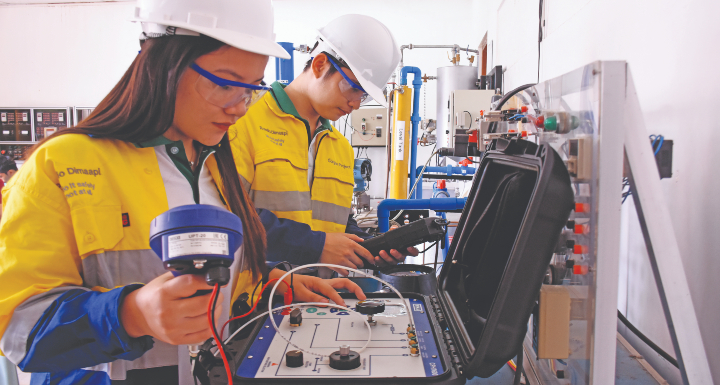
This generation's engineering students will become the inventors, innovators, and leaders of tomorrow; history showing that engineers who
have been adequately educated and trained become invaluable members of society for their contributions in solving many of humanity's issues,
driving the global economy, and enhancing key areas of human life. Thus, the goal is clear: engineering schools must focus on gearing their
students up for the challenges of tomorrow. A greater responsibility now rests on the shoulders of academia to drive the undergraduate educational
experience from a conventional pedantic curriculum to a wider fundamental experience that will prepare engineers for a lifetime of achievement.
As engineering moves forward, so must engineering education.Innovation is vital to our economic, social, and environmental future, and the present
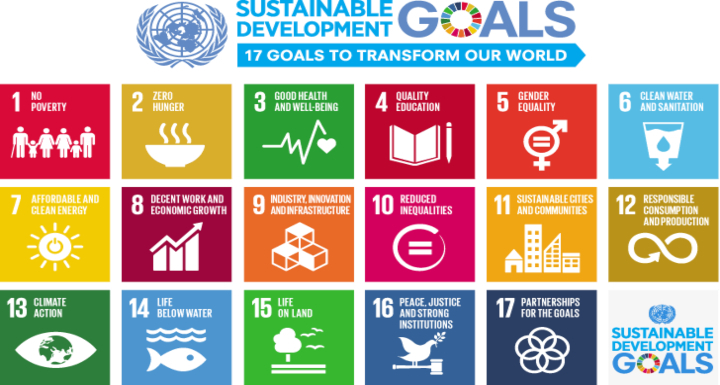
situation encourages urgent, collaborative investments on both the local and global levels necessary for the achievement of the 2030 Sustainable
Development Goals (SDGs).Therefore, in its first year, this conference aims not only to spark intellectual discussions and refresh perspectives
on the ways forward, but also to become a platform for sharing expertise, best practices, and experience that will benefit the academe, the industry,
communities, the government, and other key sectors involved in nation - and world - building.
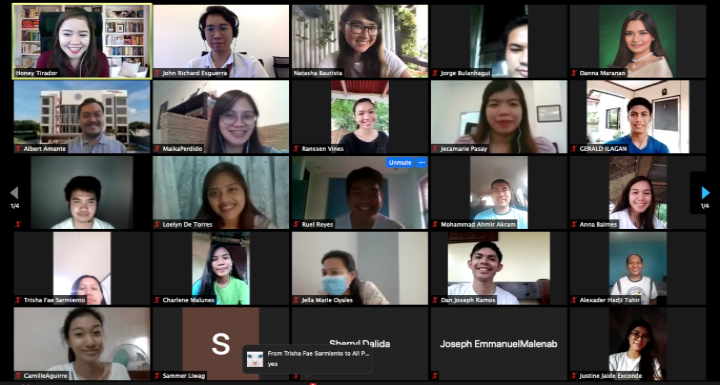
The core of this conference is active innovation, harnessing the power of virtual technology.Participants are from all over the world: guest speakers
from various engineering education organizations, industry partners, and accrediting institutions, as well as researchers, practitioners, and educators.
This virtual conference is organized and facilitated by Batangas State University’s Center for Innovation in Engineering Education(CIEE) in celebration
of 50 years of quality education in engineering.
In addition to the keynote speeches, plenary sessions, and master classes, this conference features the Innovation Challenge Competition, a thematic
competition that challenges students of higher education institutions to ideate, innovate and pitch solutions addressing the SDGs.The top ten teams shall
undergo an innovation program to improve minimum viable products, conduct validation activities, and prepare for a final demo and pitching scheduled on
December 6 and 7, 2021 during the 5th International Research Conference on the Innovations in Engineering, Science and Technology (IRCIEST V).



PROGRAMME
Day 1: Big Ideas
| 09:00 - 09:30 | Opening Ceremony | Invocation and Philippine National Anthem | |
| Welcome Remarks |
Dr. Tirso A. Ronquillo
President, Batangas State University |
||
| Message from the Philippine Senate |
Hon. Sen. Pia S. Cayetano
Chairperson, Committee on Sustainable Development Goals,
Innovation and Futures Thinking Senate of the Philippines, 18th Congress |
||
| Message from the Commission on Higher Education | Dr. J. Prospero E. De Vera III Chairperson, Commission on Higher Education | ||
| 09:30 - 10:10 | Keynote Address | Innovating Today towards the Engineering Mindset of the Future |
Engineering Mindset of the Future Dr. Sheryl Sorby
Immediate Past President & Fellow,
American Society for Engineering Education (ASEE); Professor, Engineering Education Department, University of Cincinnati, USA |
| 10:10 - 10:50 | Plenary | The Continuing Role of Engineering Education in the Attainment of the SDGs: UNESCO Engineering Report 2021 |
Prof. Gong Ke
President, World Federation of Engineering Organizations (WFEO) Spokesperson (TBA) International Center of Engineering Education (ICEE) |
| 01:30 - 03:30 | Panel Discussion |
Inclusion and Diversity in Engineering Education
Moderator: Prof. Paulina M. Macatangay Vice Chancellor for Academic Affairs BatStateU-Alangilan, Batangas State University |
Prof. Madya Dr. Syed Ahmad Helmi Syed Hassan
Head, Research Group in Engineering Education (RGEE) &Fellow, Center for Engineering Education (CEE), Universiti Teknologi Malaysia (UTM) Engr. Yetunde Adeobola Holloway Chair, Women in Engineering (WIE), World Federation of Engineering Organizations (WFEO) Engr. Federico A. Monsada President, Philippine Technological Council (PTC) Engr. Dr. Cho Win Maw Acting President, Vice President, & Evaluator, Myanmar Engineering Council (MEC) |
Day 2: Focused Topics
| 09:00 - 09:20 | Opening and Synthesis | ||
| 09:20 - 10:00 | Plenary | Matching Future-Fit Engineering Education with the CDIO Framework |
Aldert Kamp
Co-Director, CDIO Initiative; Founder, Aldert Kamp Advies, The Netherlands |
| 10:00 - 11:30 | Panel Discussion |
Teaching and Learning in the New Normal: Best Practices in Southeast Asia
Moderator: Dr. Reynato A. Gamboa Dean, College of Engineering, Architecture, and Fine Arts Batangas State University |
Dr. Helene Leong
Co-Director & Regional Leader (Asia), CDIO Initiative;Director, Educational Development Department, Singapore Polytechnic Prof. Satesh Narayana Namasivayam Assoc. Head, EGIS & Professor of Engineering and Science Heriot-Watt University Malaysia Campus Assoc. Prof. Dr. Natha Kuptasthien Director of Graduate Office, Rajamangala University of Technology Thanyaburi (RMUTT) CDIO Initiative (Thailand) |
| Master Classes | |||
| 01:00 - 02:00 | Advances in Integrated Learning Experiences Using Core Principles of Learning |
Sin-Moh Cheah
Senior Academic Mentor & Head, Teaching and Learning Unit, School of Chemical and Life Sciences,S 1ingapore Polytechnic |
|
| 02:00 - 02:30 | Assessment Methods in Education: 'How Do I Know What They Know?' |
Dr. Jennifer Culver
Educational Consultant, Texas International Education Consortium (TIEC), USA |
|
| 02:30 - 03:00 | Innovation of Engineering Education for the Future Universities |
Prof. Haydn H.D. Chen
Founding Vice President, The Asian Society for Engineering Education (AsiaSEE) |
|
| 03:00 - 03:30 | Redesigning Learning for Effective Engagement in the Virtual Learning Environment |
Dr. Lim Chee Leong
Director, Learning Innovation and Development (LID), Centre for Future Learning, Taylor’s University (Malaysia) |
|
| 03:30 - 03:45 |
Announcement of Top 10 Winners
Innovation Challenge Competition |
Assoc. Prof. Albertson D. Amante
Vice President Research And Development, Batangas State University |
|
| 03:45 - 04:00 |
Conference Closing
Batangas State University |
Prof. Rogelio A. Antenor
Vice President for Administration and Finance, Batangas State University |
|


2018 2nd Quarter Beyond Borders
This will close in 0 seconds
2018 3rd Quarter Beyond Borders
This will close in 0 seconds
2018 4th Quarter Beyond Borders
This will close in 0 seconds
2019 1st Quarter Beyond Borders
This will close in 0 seconds
2019 2nd Quarter Beyond Borders
This will close in 0 seconds
2019 3rd Quarter Beyond Borders
This will close in 0 seconds
2019 4th Quarter Beyond Borders
This will close in 0 seconds