
Publication 1
Overview The International Research Journal on Innovations in Engineering, Science and Technology (IRJIEST), owned and published by the Batangas State University (BatStateU) Philippines , is released once a year in print and electronic formats. The online version may be accessed and downloaded for free. http://www.irjiest.com.ph IRJIEST
GAD
The Gender and Development Agenda (GAD) supports Batangas State University’s vision, mission and strategic goals, as embodied in its Strategic Plan. The GAD Agenda recognizes the various GAD commitments of the University under various gender-related laws and policies, which include, but not limited to, the Philippine Plan for Gender-Responsive Development Plan (1995-2025), Women in Development and Nation Building Act (Republic Act No. 7192), Anti Sexual Harassment Act of 1995 (Republic Act No. 7877), Anti-Violence Against Women and their Children Act of 2004 (Republic Act No. 9262) and the Magna Carta of Women (Republic Act No. 9710), Gender and Development Accord of Philippine Higher Education Institutions, CHED Memorandum Order No. 1, Series of 2015 (Establishing the Policies and Guidelines on Gender and Development in the Commission on Higher Education and Higher Education Institutions). The primary thrust of Gender and Development is to develop Batangas State University into a leading gender-responsive higher education institution. This will be attained by: Integrating and advocating gender perspectives in the four-fold functions of higher education, i.e., instruction, research, extension and production, and other University operations through gender-responsive policies, programs and mechanisms; and, ensuring that every member of the academic community and its stakeholders are gender-responsive through the enhancement of their capacity to use gender lens in the performance of their functions and champion GAD efforts of the University. GOAL 1: To mainstream gender and development in the curriculum, research and extension GOAL 2: To institutionalize gender-responsive mechanisms in the University GOAL 3: To develop and recognize gender responsive members of the academic community and external stakeholders GOAL 4: To establish sustainable partnerships with external stakeholders and technical experts and foster cooperation in the planning, development, implementation, monitoring and evaluation of GAD PAPs GOAL 5: To construct/upgrade facilities which would address gender concerns of stakeholders CREATION, STRENGTHENING, AND INSTITUTIONALIZATION OF THE GENDER AND DEVELOPMENT (GAD) FOCAL POINT SYSTEM Pursuant to Section 36 of Republic Act No. 9710, otherwise known as the Magna Carta of Women (MCW), all government departments, including their attached agencies , offices, bureaus, state universities and colleges , government- owned and controlled corporations, local government units and all other government instrumentalities shall adopt gender mainstreaming as a strategy to promote women’s human rights and eliminate gender discrimination in their systems, structures, policies, programs, process and procedures. Section 37- C of the implementing Rules and Regulations (IRR) of the MCW provides that all concerned government agencies and instrumentalities mentioned above shall establish or strengthen their GFPS or a similar GAD mechanism to catalyze and accelerate gender mainstreaming within the agency. GAD Focal Point System – is an interesting and interdependent group of people in all government instrumentalities tasked to catalyze and accelerate gender mainstreaming. It is a mechanism established to ensure and advocate for, guide, coordinate, and monitor the development, implementation , review and updating of their GAD plans and GAD-related programs , activities and project (PAPs);
Electronics, Instrumentation and Mechatronics Engineering Department
The BatStateU Extension Agenda covers a wide spectrum of extension services offered by the university. The department believes that a more defined Department Extension Agenda would result in a more high impact extension activity since a more focused extension program is implemented. Likewise, the department would like to take showcase its expertise in the conduct of extension services. Hence, the formulation of the ECE – ICE – MexE (EIM) Department Extension Agenda. The EIM Extension Agenda is aligned with the College’s Extension Agenda as well as the broader BatStateU Extension Agenda. The selection of activities were in consultation with the student organizations and faculty members in-charge of the extension activity, checked and verified by the College Extension Coordinator, recommended by the extension services director and approved by the VP for Research, Development and Extension Services. Following is the EIM Department Extension Agenda: Technology Transfer Social Innovation Learning Express Jollibee Group Foundation Community Involvement through Disaster Risk Management Adopt a School Program Adopt a Barangay Program Knowledge Transfer, Capacity Building and Skills Training The EIM Department, as an engineering department prioritizes Technology Transfer of research outputs of faculty and students. However small in number, the technology transfer activities were carefully selected and ensured to be based on the needs of the clientele. One example is the Technology Transfer of SIGAW or Solar Isotropic Generator of Acoustic Wave, a Tsunami Early warning System initially installed in the province of Batangas. Funded by the United Nations, World Food Programme (UN – WFP), it is an output of research that has reached the community and sustained through partnership with the local government unit. Seventeen (17) units of SIGAW were installed. The need for such technology was expressed by the Provincial Disaster Risk Reduction and Management Office of Batangas after results of tsunami inundation by PHIVOLCS revealed that some areas of Batangas, although not facing the Pacific Ocean), is at risk for Tsunami. This is attributed to the Lubang fault located between Batangas and Mindoro. The Lubang Fault is a 180km long, WNW-ESE trending active fault that passes in the offshore areas between Batangas Province and Mindoro Island. Its nearest trace is located about 120 km south of the project site. Daligdig and Besana (1993) noted that among the strong earthquakes attributed to the Lubang Fault are those of 1852 (Intensity IX) and 1972 (Intensity VII) earthquakes. Funding support became available from UNWFP to install 17 units of Tsunami Early Warning System which PDRRMO identified. Responding to the call, the university submitted a proposal for the installation of a prototype which the EIM Department spearheaded. For three (3) months, the team developed the prototype and have it validated with PDRRMO and UNWFP representatives which they eventually approved. During this time, coordination with the Philippine Volcanology and Seismology (PHIVOLCS) also commenced. After awarding to the university the notice to proceed, the university didi a formal memorandum of agreement (MOA) signing with the LGU Beneficiaries to ensure sustainability. The role of the LGU is to ensure that the device would be safe and that they shall be the main operator of the system. After the signing of MOA and contract with UNWFP, the project commenced, with a team composed of faculty researchers from the university pursuing the project. Another breakthrough in the conduct of extension services is the Social Innovation Program. In partnership with Singapore Polytechnic, students and faculty members of the university participated in the Learning Express Program. Learning Express is an Overseas Social Innovation Project wherein the students complete the project in a period of 2 weeks. Students use Design Thinking methodology to co-create innovative prototype solutions to real-life issues. They develop an understanding of the issues faced by the overseas community in the context of their social, economic & political culture, and analyze these issues from multiple perspectives. Through this project, students are able to apply their teamwork and communication skills, develop a better understanding of themselves, empathy for the community they are serving, and realise the positive impact they can make in the lives of a community in need. Faculty members and students of the EIM Department participated in this event. The Jollibee Group Foundation also has its Social Innovation Program, dubbed as Farmer’s Entreprenurship Program Youth Challenge, to encourage students and faculty to develop solutions that addresses problems in the agriculture sector. Three (3) teams from the EIM Department were selected as finalists of the nationwide competition and were given grants to implement the programs. The three teams were: E-Pest, Go Beeyond and A-QUAS. The EIM Department also participates in high impact extension community through adopt a school and adopt a barangay and projects that immediately responds to disaster such as Project LARGA or Lindol Adaptation and Recovery with Geohazards Assesment in Mabini Batangas. The extension activity was based on the immediate need of the LGU of Mabini for rapid situational assessment of the municipality after series of earthquake swarms hit the LGU. The university responded by providing extension services through Project LARGA Mabini. The extension services component includes the following: Geo-hazard Assessment and Mapping Medical Services Stress Debriefing Awit at Sayaw : A road to recovery show Structural Integrity Assessment Installation of SIGAW As a department knowledgeable in Geospatial Information System, the EIM Department, in collaboration with other departments, facilitated the Geo-hazard Assessment through participative Mapping. These extension activities were properly documented and were provided funds by both the university and some external funding agencies. Impact assessment is still a work in progress, but the response from interviews and focus group discussions has been heart – warming. The accomplishments of the EIM Department is a proof of the university’s dedication to promote innovation, collaboration and community development. True to our motto of Leading Innovations and Transforming Lives.
College of Engineering Technology
malvar-slider-1malvar-slider-2malvar-slider-3malvar-slider-4malvar-slider-5CABEIHM BLDGCECS BLDG(1)CET BLDGCTE BLDGSC2(1)SC2 Malvar Administration Students Faculty Research Extension Linkages Facilities College Of Engineering Technology The College of Engineering Technology (CET) is one of the premier departments at Batangas State University, The National Engineering University – JPLPC Malvar. Since 2001, the college has offered the Bachelor of Industrial Technology (BIT) program to equip students with essential technical and vocational skills. CET implements the Dual Training System (DTS), which integrates both theoretical instruction and practical industry training. This unique model provides vocational, technical, and technician training programs through a structured learning experience in both academic institutions and partner industries. The Dual System, as outlined in Republic Act No. 7686 (Dual Training System Act of 1994), was enacted under President Fidel V. Ramos on February 25, 1994, reinforcing the country’s commitment to industry-aligned education. Recognizing the need for elevated technical expertise and global competitiveness, the Bachelor of Industrial Technology program was transitioned to the Bachelor of Engineering Technology through Board Resolution No. 158, s. 2023, as approved by the Board of Regents. This enhanced program aims to produce well-rounded, highly skilled, and globally competitive professionals who can meet both local and international industry demands. Graduates are expected to successfully apply engineering technology principles for societal development while demonstrating a high level of professionalism in the workplace. The College of Engineering Technology offer nine major programs: 1. Bachelor of Automotive Engineering Technology The Automotive Engineering Technology program is designed to prepare students with the basic knowledge and skills necessary for modern state-of-the-art automotive workers. The increasing sophistication of Automotive Technology now requires workers who can use computerized shop equipment and work with electronic components while maintaining their skills with traditional hand tools. Automotive service technicians as vehicle components and systems become increasingly sophisticated. Motorcycle Mechanics repair and overhaul motorcycles. Besides repairing engines, they may work on clutch transmissions, brakes, drivelines, differential cycles, tires, power Steering systems, auto electricity and electronics, ignition systems, and minor body repairs. 2. Bachelor of Computer Engineering Technology Computer Engineering Technology develops and prepares graduates who will be an integral part of the pool of technology experts in computer technology. The program combines theoretical and practical concepts in electrical and electronics technology, computer technology, mathematics, computer science, management, and general education that leads to the Bachelor of Engineering Technology degree. The Degree intends to prepare graduates to find employment as computer technologists here and Bachelor of Computer Engineering Technology – Feasibility Study abroad. Students will gain knowledge and skills in digital electronics, computer programming, computer networking, and system analysis and design. 3. Bachelor of Civil Engineering Technology The Civil Engineering Technology is a dynamic educational opportunity offering skill-based learning through class instructions, extensive laboratory experience, and fieldwork. Concentrations are as follows: carpentry, architectural design technology, construction/project management, surveying and mapping, construction estimate, and soil and construction material testing. The program also introduces fundamental concepts related to standards, public health, and safety in constructions enforced by the government’s regulatory agencies. The program also prepares graduates to find employment as civil technologists here and abroad. 4. Bachelor of Drafting Engineering Technology The Drafting Engineering Technology program provides knowledge in the construction of different working drawings that help improve the skills in drawing. Knowledge of graphic communication is an essential factor of the course. This course includes basic and advanced technical drawings, floor planning, architectural and structural drawings, architectural modeling, and estimating. This course also contains computer-aided design concepts and applications 5. Bachelor of Electrical Engineering Technology The Electrical Engineering Technology program will prepare graduates with the skills necessary to enter careers in the design, application, installation, manufacturing, operation, and/or maintenance of electrical systems. Graduates of this degree program typically have strengths in the building, testing, operation, and maintenance of existing electrical systems and are well-prepared to develop and implement electrical systems. 6. Bachelor of Electronics Engineering Technology The Electronics Engineering Program prepares graduates for employment in a wide variety of industries and/or using electrical and electronic equipment. The program provides a thorough understanding of digital electronics, circuit analysis, electronic services, machine controls, programmable logic controllers, and industrial electronics. This course also includes theoretical analysis, software simulation, and hands-on application. 7. Bachelor of Food Engineering Technology The program in Food Engineering Technology deals with the basics of food science and technology, including food chemistry, food microbiology, food nutrition, and analysis, food processing and preservation, food product development and testing, and food packaging and storage technology. This program also introduces fundamental concepts related to food quality management to meet the industry’s food standards and the government’s regulatory agencies. The program also entails to production of future food entrepreneurs since the demand of the business food industry is high in the production line. 8. Bachelor Mechanical Engineering Technology Mechanical Engineering Technology provides the knowledge, skills, and attitudes in the various machining processes that can be applied to their on-the-job training and future careers. It encompasses measurements, metallurgy and heat treatment, welding drive components, repair and maintenance, pipe lifting, lubrication, and the principle of tool and die. Likewise, pneumatics and hydraulics, CNC, inspection, and quality control are also vital elements of the curriculum. 9. Bachelor of Mechatronics Engineering Technology Mechatronics Engineering Technology is a field of technology that includes a combination of mechanical, electronics, automation, and computer technology. Mechatronics aims to be a design process that unifies these technology fields. Students in the mechatronics technology degree program will gain the technical know-how to install, repair, and maintain various types of electromechanical equipment and industrial machines and work with electromechanical and automated equipment to create industrial and commercial products. On-the-job training and project development study are generally required. Program Offerings Description & Curriculum Bachelor of Industrial Technology – Automotive Technology Bachelor of Industrial Technology – Computer Technology Bachelor of Industrial Technology – Civil Technology Bachelor of Industrial Technology – Drafting Technology Bachelor of Industrial Technology – Electrical Technology Bachelor of Industrial Technology – Electronics Technology
Nasugbu – Laboratory School
BSU Nasugbu Campusnasugbu-apacible-statuenasugbu-hostelnasugbu-cas-laboratoriesnasugbu-gym Nasugbu Administration Students Faculty Research Extension Linkages Facilities Laboratory School Philosophy It is the responsibility of the Laboratory School to be a contributor in nation-building by instilling curiosity and a love for learning in every child, so that they progress into young adults and productive citizen of the society. Functions The Batangas State University Laboratory School being mandated by the Republic Act No. 11694 is committed to shepherd young learners veering towards leadership by focusing and adopting advanced teaching and learning on science, technology, engineering and mathematics. Thus, it establishes necessary machineries institutionalizing the following functions: • To serve as a feeder school of the university; • To provide STEM-Based Basic Education Programs; • To aspire as a professional development center for teachers in the field. • To create nurturing research environment for testing and implementing new instructional methodologies; • To sustain relevant extension service and outreach program for the enhancement of academic formation; and • To operate as an observation site for studying teaching and learning systems. It offers K-12 basic education program, that is from Kindergarten 2 to Grade 12. Kindergarten 2 is offered in the Pre-Elementary, Grade 1-6 in the Elementary Level, Grade 7-10 in the Junior High School (JHS) and Grade 11-12 in the Senior High School (SHS) with Science, Technology, Engineering and Mathematics (STEM) as the strand offered under the Academic Track. Objectives The BatStateU Laboratory School, in light of its functions, aims to develop learners in becoming well-rounded, well adjusted, mentally alert, responsible, disciplined, law-abiding, and God-loving citizens equipped and imbued with right knowledge, skills, attitudes and values as their solid foundation for their entry into grade one, high school and college with adequate exposure to relevant training in different learning areas to prepare them to become productive and worthy members of the society. Specifically, it aims to: To provide quality and relevant education to learners under the STEM-Based K-12 Basic Education Program. To promote holistic development through active involvement and participation in and off Campus co-curricular activities. To continually sustain pedagogical effectiveness through quality teaching and learning by: Nurturing quality teacher competence and performance. Sustaining the increased quality time devoted to instruction. Improving instructional facilities to provide variety of learning resources for classroom use. Developing learners’ strong moral values that will enable them to have the courage to face the realities of life and the challenges of change. To enhance learner’s spiritual formation and development through the revitalize homeroom guidance and integrated values education program and activities that will strengthen Christian faith. Goals – Kindergarten Level The Laboratory School Kindergarten Education aims to equip young learners with basic learning skills needed as they step up towards formal set-up of learning. Specifically, it aims to produce individuals who: are independent individuals capable of performing basic tasks in school and at home; are sociable and can interact with peers, teachers, and other members of the community; have developed their concentration, attention and confidence as they perform engaging tasks connected to real life situations, and; enjoy play-based learning experiences that enhance their physical, emotional, social and mental development and values formation. acquire basic learning skills in order to engage in the formal learning. Goals – Elementary Level The Laboratory School Elementary Education aims to provide knowledge, skills, and attitude which are fundamental for personal growth and development. This basic education provides literacy, numerical manipulation, science and technology skills, communication skills, and values. The elementary curriculum aims to produce a “product” who: Can read with comprehension of both functional and recreational materials and can interpret and apply the values and attitudes learned in real-life situations. Has mastery of the basic facts and techniques of computation and uses mathematical knowledge to solve problems applicable to everyday living. Acquires knowledge, conceptual understanding, and skills to solve problems and make informed decisions in scientific contexts using scientific processes. Can express oneself adequately, concisely, and effectively both in Filipino and English languages – orally and in writing. Practices good manners and right conduct at all times. Can see and understands life realistically thus, realizing his important role, duties, and responsibilities in a growing society, and as a member of different social groups such as the family, community, and eventually the nation and the world. Displays love, pride, and appreciation of the Filipino culture and traditions; respects the ways and culture of people. Expresses knowledge and ideas and shows appreciation of one’s cultural heritage, through the fundamentals of music, arts, and physical education; actively participates in sports to develop sportsmanship and teamwork. Goals – Junior Middle Program The Laboratory School Junior High School Program, in light of its objectives, is committed to facilitate adequate learning experiences. The program aims to: Develop cognitive skills, psychomotor skills, technology ethics and digital citizenships anchored on the curriculum theory, pedagogy and assessment practices in Science, Technology, Engineering and Mathematics. (STEM) Manifest laudable soft skills and show deep enthusiasm on the challenging and unique area of human thinking and patterns of character. (NON-STEM) Cognizant of the fundamental theories and principles of research and know how to articulate them and when to use them in their field. (Research). Develop linguistic and communicative competence essential for self-assertion and knowledge acquisition of various subjects and disciplines. (Communication) Recognize the importance of spiritual formation and strong moral values in becoming both smart and good in thought and in deed. (Faith) Acquire leadership qualities and skills needed for ongoing and sustained personal and academic growth through student’s organizations and student’s school representation in academic and non-academic school activities. (Leadership) Goals – Senior Middle Program The Laboratory School Senior High School Program, in light of its objectives, is committed to facilitate very adequate learning experiences. The program aims to: Demonstrate adherence to and application of cognitive skills, psychomotor skills, technology ethics and digital citizenship that run in tandem with the curriculum theory, pedagogy and assessment practices in Science, Technology, Engineering and Mathematics. (STEM) Strengthen the soft skills
Sports and Development
The Office of Sports Development Program is one of the disciplines which is under the direction of the Vice-President for Academic Affairs. It is also one of the offices concerned with the support to students specifically in the areas of sports. As such, it provides leadership among sports coordinators, heads, coaches, officials, athletes and students during sports activities and in participation in local, regional, national and international meets and sports competitions. It also aims to establish linkages with different associations to improve the sport development programs of the university. The Office of Sports Development Program supports the University’s vision and mission of academic excellence. It is working hand and hand with the University in serving not only the BatStateU community but also to other stakeholders. To achieve the philosophy and the implementation of the Sports Development Program action plan, the continuous support of the university, in terms of funding of facilities, equipment, supplies, materials, recruitment, training, competitions, presentations and uniforms, is sought for. Furthermore, it seeks the assistance of the Budget Office to allocate funds for the different activities of the Sports Development Program. Laurelian Sepaktakraw Association, Inc. (LASETA, Inc.) Laurelian Sepaktakraw Association, Inc. (LASETA,Inc.) is a SEC registered organization and an active sports club of BatStateUJPLPC-Malvar. This organization was based from the word “Lanseta” or knife which is one of the trademarks of Batangueños. This was founded last 2014 by the former athlete and now the Head Coach of Sepaktaktaw Team of BatStateU Dr. Teejay D. Panganiban with the guidance and support of the currently head of sports development program of JPLPC-Malvar Mr. Michael San Miguel and the Director of Sports Development Program of the BatStateU system Dr. Francisco V. Aguirre. This sports club is also a member of Pilipinas SepakTakraw League.
Other Information
internationalGlobal Global News Admission Schedule of Fees Partners & Linkages Downloads Students Other Information Contact Us Global Menu Home News Admissions Schedule of Fees Partners & Linkages Downloads Students Other Information Contact Us Other Information A. Academic Year Batangas State University’s Academic Year has two regular semesters (first semester, August to December and second semester, (January to May) and summer (June to July). B. Medium of Instruction English is the primary medium of instruction used in the University C. Living Accommodations inside the University Batangas State University has hostel and dormitories at the GPB Main Campus I, GPB Main Campus II and at BatStateU Nasugbu. D. About the Philippines Climate There are two seasons in the Philippines: Rainy season (June to October) and dry season (November to May). FOR FOREIGN TRANSFER STUDENTS (Those coming from other universities) Must have earned at least 33 academic units or more. Must submit ALL grades in all subjects taken from previous schools universities Must meet the required GWA for the degree program he/she is applying for. Must submit his/her transcript of records for evaluation purposes. Must fill out an application form Must pay the application fee of $20 (subject to change) Must submit two passport size photos 8. If with gap, please submit an affidavit of no enrollment during the semester/year that you did not enroll. Meanwhile, the following are the requirements by the Bureau of Immigration: For new applicants (Student Visa Conversion): National Intelligence Coordinating Agency (NICA) Clearance from the Bureau of Immigration Medical Certification from the Bureau of Quarantine National Bureau of Investigation (NBI) Clearance Duly accomplished Personal Data Sheet Photocopy of Passport (Bio-page, latest arrival, latest admission with valid authorized stay and valid Bureau of Quarantine Clearance) Bureau of Immigration Clearance Certificate For transferees (Student Visa Extension): Commission on Higher Education Clearance Certificate Honorable Dismissal or Certificate of Transfer from previous school Photocopy of applicant’s ACR I-Card Bureau of Immigration Clearance Certificate Photocopy of Passport (Bio-page, and latest admission with valid authorized stay and visa implementation page) Barangay Clearance Certificate Foreign students may be allowed to enroll if they have the following types of visa: 9 (f) – Student visa 9 (e), 9 (e-1) or 9 (e-2) – Foreign government official or dependent 47 (a) (2) – Exchange fellow or scholar sponsored by an international organization 9 (g) – Pre-arranged employment (Working visa/Missionary) PD 218 – Foreign investor 9 (d) – Treaty trader 13, 13 (a) to 13 (g) – Permanent resident SRRV – Special Resident Retiree Visa SIRV – Special Investor Resident Visa
Admissions
internationalGlobal Global News Admission Schedule of Fees Partners & Linkages Downloads Students Other Information Contact Us Global Menu Home News Admissions Schedule of Fees Partners & Linkages Downloads Students Other Information Contact Us Admissions ADMISSION, REQUIREMENTS AND PROCEDURES FOR FOREIGN STUDENTS I. GENERAL REQUIREMENTS A. Bachelors Degree A foreign applicant who graduated from a high school abroad and has not enrolled in college may be admitted to the University provided that the following requirements are met: (1) completed secondary education from his country; (2) passing rate in a college qualifying national or international foreign-administered examination such as General Certificate of Education (GCE), the Scholastic Aptitude Test (SAT) or any equivalent examination: GCE: with a grade of E in other subjects covered in the GCE an two level A passes in the related subjects required in the course applied SAT: with minimum combined score of 1200 in Mathematics, Critical Reading and Writing sub-test areas. B. Masters and Doctoral Degree A foreign applicant who has completed a bachelor’s degree may be admitted to the Master’s program, while an applicant who has completed a Master’s degree may be admitted to the doctorate program, provided that (1) the academic requirements for the graduate degree being applied for were met and (2) passed the University’s English Proficiency Test. C. English Proficiency Test Applicants whose native language or whose medium of instruction is not English are required to have a minimum score of 46-59 iBT (and its equivalent PBT) in the Test of English as a Foreign Language (TOEFL) and 5.5 iBT (and its equivalent PBT) in the International English Language Testing System (IELTS). Applicants must present a copy of his scores to the University. Batangas State University, GPB Main Campus I, Rizal Ave. Batangas City, 4200, Philippines. Applicants who did not pass the TOEFL and TOEIC requirements will undergo the Intensive English Language Program administered by the University’s English Department. D. BatStateU Admission Test A bachelor’s degree applicant who fails to satisfy the required foreign-administered examination described in Item I.A shall take the BatStateU Admission Test. Applicants who are required to take the BatStateU Admission Test are advised to apply for examination two months prior to the beginning of a particular semester. A Special Admission test may be given upon request. The BatStateU Admission Test consists of subtests in English, Mathematics, Science and Abstract Reasoning. E. Filipino Applicants from Abroad Filipinos who graduated from schools abroad applying for (bachelor, master’s and doctorate) degree in the University must also satisfy the same requirements as those for foreign students. F. Application for Deferment of Enrollment A qualified applicant who, for a valid reason, cannot enroll in the semester originally applied for may apply for deferment in the succeeding semester by writing to the University Registrar. Such applicant must not have taken any academic college subject prior to enrolment. II. REQUIREMENTS Accomplished admission foreign students application form downloadable at www.batstateu.edu.ph A non-refundable application fee of Php 300 for resident foreign students and US$20 for non-resident foreign students in cash, money order, cashier’s or manager’s check payable to Batangas State University Upper secondary school certificate with a grade equivalent issued by the Department of Education of the country of origin (if freshman) or TOR with equivalent grading system (if transferee) 4. Notarized affidavit of support including bank statements or notarized notice of grant for institutional scholars to cover expenses for the student’s accommodation and subsistence, as well as school dues and other incidental expenses (proof of financial capability) Photocopy of the student’s passport datapage showing the date and the place of birth Photocopy of birth certificate or its equivalent duly authenticated by the Philippine Foreign Service Post Authentication from Consular Section of the Embassy of the Philippines in the country of origin Certificate of Good Moral Character from the country of origin Clearance issued by the national (or federal, whichever is applicable) police authorities in the student’s country of origin or legal residence duly authenticated by the Philippine Foreign Service Post having consular jurisdiction over the place Medical health certificate issued by an authorized physician (from country of origin) including but not limited to chest x-ray, HIV and Hepatitis B clearance and drug test Official TOEFL or TOEIC results Student Visa For applicants in the graduate school, official transcript of records (1 official transcript of records and 3 photo copies) from the schools or university last attended and duly authenticated by the Philippine Foreign Service Post located at the student applicant’s country of origin or legal residence, and official examination certificates (certified English translations of documents must also be submitted), if any, (Duly designated authorities in the country of origin of the applicant shall authenticate the photocopied documents)
Basic Education – Functions and Goals
The Batangas State University Integrated School offers an integrated and enhanced K to12 curriculum . It serves a threefold-function : 1) to serve as a feeder school for the University 2) to function as a laboratory school of the BatStateU College of Teacher Education and 3) to provide educational service to the children of the faculty and employees of the university and of the general public. In more specific terms, BSU Integrated School, Elementary Department aims: To provide optimum learning experiences which will promote academic excellence; To create a learning environment that will allow the children to develop positive self–concept, self–discipline, and good working habits; To provide opportunities that will develop love and appreciation for artistic and cultural experiences; To enhance pupil’s awareness of the scientific and technological advancement in the country and in the world; To nurture Filipino children with love of God and country and with good moral values so that they grow as patriotic and law–abiding citizens with genuine concern towards their family, the community and society in general. BSU Integrated School, High School Department aims: To provide optimum learning experiences which will promote academic excellence; To create a learning environment that will allow the students to develop love of God and country, positive self–concept, self–discipline, dignity of work and other desirable moral, spiritual and socio–cultural values; To enhance student’s awareness of the scientific advancement in the country and in the world and inculcate in them critical thinking, creativity and innovativeness; To produce students equipped with knowledge, skills, and desirable attitudes and values for making an intelligent choice of a career and an enlightened commitment to serve God, country and fellowmen.
Red Spartan team Bags 2nd Prize in Int’l. Online Competition
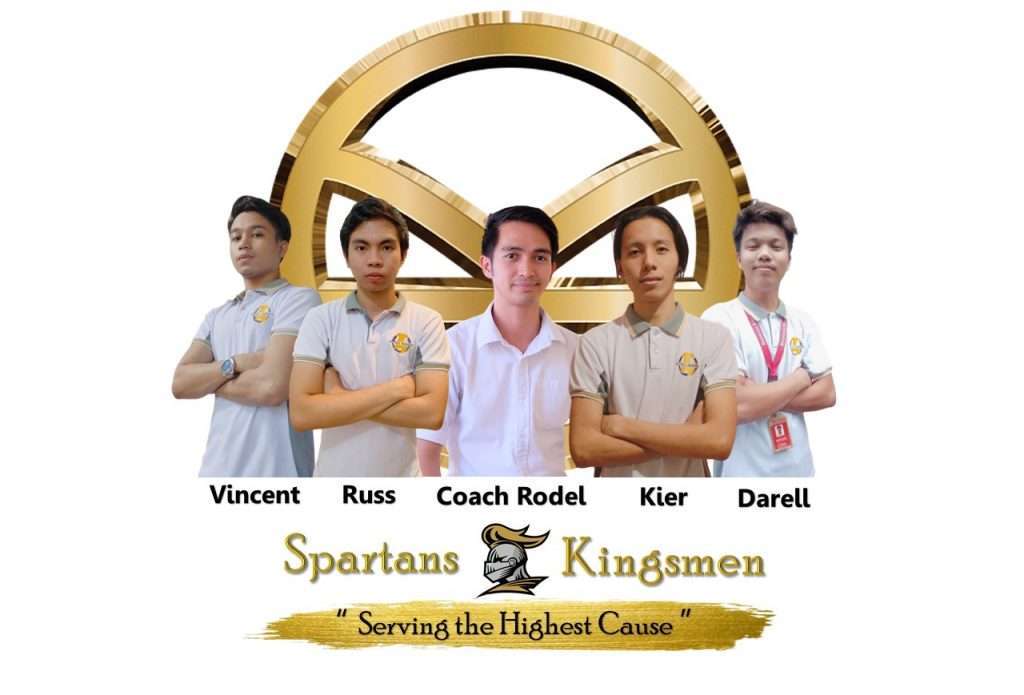
A team of Electrical Engineering students, who call themselves the Spartan Kingsmen, received second prize at the 2020 International Energy and Electricity Market Business Decision Simulation Online Competition, hosted by the Shanghai University of Electric Power (SUEP), in awarding ceremonies held virtually on November 6, 2020.