BatStateU spearheads BRIDGES launching joined by 39 Engineering SUCs
BATANGAS CITY – Batangas State University takes the lead on engineering research as it spearheaded the recent launch of the Building Research and Innovation Development Goals for Engineering SUCs (BRIDGES) program together with 39 other State Universities and Colleges (SUCs) in the country. The collaboration was formalized through a virtual Memorandum of Agreement (MOA) signing ceremony with all partner institutions held via Zoom on July 13-14 from 9:00 AM to 12:00 PM. BRIDGES is a research program spearheaded by the Batangas State University that is geared towards responding to the problems of the community through active research collaboration with selected engineering SUCs from Luzon, Visayas and Mindanao. Proposed by the University President, Dr. Tirso A. Ronquillo and approved by the Board of Regents last December 2020, the BRIDGES Program will be funded by Batangas State University with a shared counterpart funding from partner institutions based on mutually agreed Work and Financial Plan. The total budget for the first phase of BRIDGES amounts to over 22 million pesos. Six (6) projects were initially identified under the BRIDGES program which ultimately aims to attain the United Nations Sustainable Development Goals (SDGs), and to specifically address challenges in the areas of resilient infrastructure, disaster risk reduction and management, tourism, GIS application development, and agriculture e-commerce, among others. Led by Batangas State University, the other thirty-nine (39) collaborating SUCs under the six (6) projects include Bataan Peninsula State University, Bicol University, Bukidnon State University, Bulacan Agriculture State College, Bulacan State University, Camiguin Polytechnic State College, Caraga State University, Cavite State University, Cebu Technological University, Central Mindanao University, Central Philippines State University, Don Honorio Ventura State University, Eastern Samar State University, Guimaras State College, Ifugao State University, Iloilo Science and Technology University, Isabela State University, Jose Rizal Memorial State University, Kalinga State University, Laguna State Polytechnic University, Mariano Marcos State University, Marinduque State College, Mindoro State University, Mountain Province State Polytechnic College, Northern Negros State College of Science and Technology, Pampanga State Agricultural University, Polytechnic University of the Philippines, Quirino State University, Rizal Technological University, Romblon State University, Samar State University, Southern Philippine Agri-Business, Marine & Aquatic School of Technology, Tarlac Agricultural University, Tarlac State University, Technological University of the Philippines, University of Rizal System, University of Southeastern Philippines, University of Southern Mindanao and Western Mindanao State University. More SUCs are targeted to be enjoined in the next phases of BRIDGES. Joined by their respective Project Management Teams, the Presidents of the participating SUCs expressed their commitment to fully support the BRIDGES Program. In his final message, President Ronquillo gave the ways forward and expressed gratitude for the support of the participating SUCs. Batangas State University is a Level IV state university in the CALABARZON region, and the only SUC in the country accredited by the US Accreditation Board for Engineering and Technology (ABET) for its Engineering and Information Technology programs. It is rated 3 stars in the Quacquarelli Symonds (QS) list of top universities and has the highest number of ASEAN Engineers faculty among Philippine higher education institutions. ### FOR INQUIRIES, CONTACT: Engr. ALBERTSON D. AMANTE 09175620916 vprdes@g.batstate-u.edu.ph
Batangas State University partners with University of Wolverhampton for Implementation of DOST – British Council Newton Fund Research Linkages Grant
Batangas State University and University of Wolverhampton, spearheaded by President Tirso A. Ronquillo and Prof. Chaminda Pathirage finally kicked off the activities for the DOST-British Council Newton Fund Grant for Researcher Linkages. The research linkage will be in a form of workshop with the theme: “Developing Smart Environmental Resilience Solutions for Coastal areas in the Philippines: Susceptibility, Adaptation and Mitigation Measures: SEACAP.” This research linkage workshop will convene local stakeholders and academic professionals in developing significant and innovative strategies, technologies and approaches towards environmental resilience of the coastal communities in the Philippines. SEACAP will serve as a platform for both experts from the UK and Philippines to better interpret and adapt environmental resilience in coastal communities as well as understand the culture, practices, needs and limitations in developing coastal resilience. The 5-day scientific workshop aims to gather researchers of various disciplines interested in helping the Philippines become environmentally resilient on disaster and degradation of natural resources. Senior and Early Career Researchers (ECRs), from both the UK and the Philippines, from various disciplines such as environmental and coastal engineering, communication and information systems, big data data, internet of things and built environment are the intended audience. It will help strengthen the capacity of local participants in realizing the relevance of emerging technologies in environmental resilience. It will also provide a good opportunity to develop multidisciplinary approaches for effective environmental resilience management of coastal communities. For further details of this research linkage, you may visit the SEACAP webpage. Reference pages from British Council Website https://www.britishcouncil.ph/programmes/education/newton-agham-programme/grant-awardees/2020 https://www.britishcouncil.ph/about/press/six-female-researchers-lead-years-dost-newton-awards
BatStateU and India’s CMFRI collaborate for research on marine science
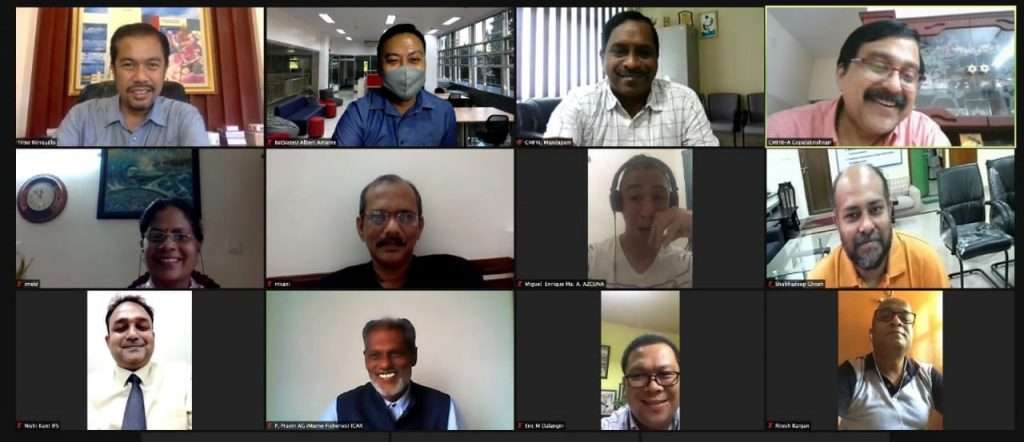
Batangas State University and India’s Central Marine Fisheries Research Institute (CMFRI) formally convened in a virtual meeting as part of the initial scoping discussion for a research collaboration in the field of marine science, May 20. CMFRI is a marine fisheries research institute located in Kerala, India which has emerged as a leading tropical marine fisheries research institute in the world. The institution enjoys the status of a premier research organization which is comparable to any other institution in the developed countries. Specific key areas of collaboration were pointed out during the meeting which include cage culture of fish, seaweed culture, effects of ocean acidification and global warming on marine ecosystems, and use of microalgae cultures to produce fishmeal and bioactive compounds for drug discovery, and other related areas. The new partnership will be forged through a Memorandum of Understanding (MoU) between BatStateU and CMFRI. The MoU will include provision of funds and expertise from the Indian researchers and experts at CMFRI. Meanwhile, a short-term exchange program between researchers from both institutions will also be proposed. The online meeting was attended by BatStateU President Tirso A. Ronquillo, Vice President for Research, Development and Extension Services Engr. Albertson D. Amante, BatStateU ARASOF-Nasugbu Chancellor Dr. Enrico M. Dalangin, VIP CORALS – Nasugbu Head Dr. Miguel Enrique Ma. A. Azcuna, as well as key officials of CMFRI. New horizons await the Philippine-India research cooperation on marine biodiversity. More developments regarding this collaboration is expected to be initiated within the year. Photo source: India in Philippines (Embassy of India, Manila) Facebook page (https://www.facebook.com/IndiaInPhilippines/photos/a.468605903270342/2311234842340763/)
SEACAP Contact Us
Home SEACAP Team Call for Participation Workshop Activities Contact US Contact us For any queries (both UK and Philippines side), please email: seacap@g.batstate-u.edu.ph Dr. Muhammad Rana ( m.q.rana@wlv.ac.uk ) or Prof Chaminda Pathirage ( C.Pathirage@wlv.ac.uk ) for UK participants Dr. Cristina Amor Rosales ( cristinaamor.rosales@g.batstate-u.edu.ph ) for Filipino participants
SEACAP Call for Participation
Home SEACAP Team Call for Participation Workshop Activities Contact US Developing Smart Environmental Resilience Solutions for Coastal areas in the Philippines: Susceptibility, Adaptation and Mitigation Measures: SEACAP. Disciplines: Built Environment, Engineering, Environmental Resilience, Emergency Management Partner Universities: University of Wolverhampton (UK) and Batangas State University (Philippines) Dates and venue: (October 24-26, 2021) Batangas State University Pablo Borbon Main I, Batangas City, Philippines The full application below must be completed and submitted by the 30th of September 2021 using the google forms link at the end of this email Workshop background: The vulnerability of the Philippines as an archipelago is evident in a series of disasters that struck the country. Philippines’ 832 municipalities are in coastal areas where 62% of the total population of the Philippines live. Its 36,289 km of coastline made this tropical region predisposes the island to rainy and dry seasons due to variations in the trade wind intensity and tropical convergence activity of the Pacific Ocean. A notable disaster in the Philippine coastal community was the storm surge brought by Hurricane Haiyan in 2013 leading to a loss of 6,300 people and damage to properties amounting to £1.8 Billion. In addition, Philippines’ geographic location in the “Pacific Ring of Fire” surrounded it with trenches and fault lines which may cause earthquakes and tsunamis. This SEACAP (Solutions for Environmental Adaptation of Coastal areas in Philippines) workshop will serve as a platform for both experts from the UK and Philippines to better interpret and adapt environmental resilience in coastal communities as well as understand the culture, practices, needs and limitations in developing coastal resilience. The 5-day scientific workshop aims to gather researchers of various disciplines interested in helping the Philippines become environmentally resilient on disaster and degradation of natural resources. Senior and Early Career Researchers (ECRs), from both the UK and the Philippines, from various disciplines such as environmental and coastal engineering, communication and information systems, big data data, internet of things and built environment are the intended audience. It will help strengthen the capacity of local participants in realizing the relevance of emerging technologies in environmental resilience. It will also provide a good opportunity to develop multidisciplinary approaches for effective environmental resilience management of coastal communities. The programme, ‘British Council Researcher Links’ provides opportunities for early career researchers from the UK and internationally to interact, learn from each other and explore opportunities for building long-lasting research collaborations. As part of this programme, we are now recruiting early career researchers and other relevant stakeholders to participate in the above workshop, jointly organised by University of Wolverhampton, UK and Batangas State University, Philippines. The British Council will cover the costs related to the participation in the workshop, including: travel (both international and local), accommodation and meals. Costs for the visa, and travel insurance will be covered; however participants will be responsible for making all the necessary arrangements. The British Council accepts no responsibility for any problems which may occur when the participants are in-country especially due to the complications caused by COVID-19. Sponsorship Newton Fund will cover the costs related to the participation in the workshop, including travel (both international and local), accommodation and meals only for up to 20 UK resident researchers. Costs for the visa and travel insurance will be covered for UK participants; however, participants will be responsible for making all the necessary arrangements. The workshop organisers accept no responsibility for any problems which may occur when the participants are in-country especially due to the complications, limitations and restrictions caused by the current COVID-19 situation. Eligibility Applications must be submitted before the deadline using the Researcher Links this application form (upon clicking this should lead to the Google form) Participants must be Early Career Researchers: Early Career Researcher is someone holding a PhD (or having equivalent research experience) and having up to 10 years of post-PhD research experience. (waived) Participants must have a research or academic position (a permanent post, research contract, or fellowship etc.) at a recognized research institution either in the UK or in the Philippines Selection Procedure Applications to participate in the workshop will be screened according to following criteria: Eligibility checking Quality assessment Quality Assessment Experience and relevance of the applicant’s research area to the workshop Motivation and contribution to the aims of the workshop Description of the long term impact expected through the participation in the workshop Ability to disseminate workshop’s outcomes Application and Deadline The full application form must be completed and submitted by the 30th of September 2021 by 16:00 GMT. Equal Opportunities Equal opportunities and diversity are at the heart of the British Council’s cultural relations ambitions. While recognising that some research fields are dominated by one particular gender, coordinators are encouraged to work towards an equal gender balance and promote diversity. They must not exclude applicants on the basis of ethnicity, gender, religious belief, sexual orientation, or disability. Participants’ selection undertaken by workshop organisers must not contravene this policy. Extra support to enable participation of Early Career Researchers with special needs will be given. Notification Results Only the successful applicants will be notified via email by 8th of October 2021. *Date of the workshop may change due to the current COVID-19 situation. Format of the workshop (virtual or face-to-face) will be determined for both countries’ travel guidelines.
SEACAP
Home SEACAP Team Call for Participation Workshop Activities Contact US The vulnerability of the Philippines as an archipelago is evident in a series of disasters that struck the country. Philippines’ 832 municipalities are in coastal areas where 62% of the total population of the Philippines live. Its 36,289 km of coastline made this tropical region predisposes the island to rainy and dry seasons due to variations in the trade wind intensity and tropical convergence activity of the Pacific Ocean. A notable disaster in the Philippine coastal community was the storm surge brought by Hurricane Haiyan in 2013 leading to a loss of 6,300 people and damage to properties amounting to £1.8 Billion. In addition, Philippines geographic location in the “Pacific Ring of Fire” surrounded it with trenches and fault lines which may cause earthquakes and tsunamis. One of the many coastlines in the Philippines. Damages to coastline of Tacloban region after Typhoon Yolanda (Haiyan) SEACAP This SEACAP (Solutions for Environmental Adaptation of Coastal areas in Philippines) workshop will serve as a platform for both experts from the UK and Philippines to better interpret and adapt environmental resilience in coastal communities as well as understand the culture, practices, needs and limitations in developing coastal resilience. The 5-day scientific workshop aims to gather researchers of various disciplines interested in helping the Philippines become environmentally resilient on disaster and degradation of natural resources. Senior and Early Career Researchers (ECRs), from both the UK and the Philippines, from various disciplines such as environmental and coastal engineering, communication and information systems, big data data, internet of things and built environment are the intended audience. It will help strengthen the capacity of local participants in realizing the relevance of emerging technologies in environmental resilience. It will also provide a good opportunity to develop multidisciplinary approaches for effective environmental resilience management of coastal communities. Solar-Powered Isotropic Generator of Acoustic Wave (SIGAW) Tactical Operative Amphibious Drive (TOAD) UK-Philippines Researcher Links Workshop The programme, ‘British Council Researcher Links’ provides opportunities for early career researchers from the UK and internationally to interact, learn from each other and explore opportunities for building long-lasting research collaborations. As part of this programme, we are now recruiting early career researchers and other relevant stakeholders to participate in the above workshop, jointly organized by University of Wolverhampton, UK and Batangas State University, Philippines. Proceed here for details on how to participate in the workshop.
Post-Contract Award Disclosures
2020 Procurement of Clothing Materials in Batangas State University School Uniform AY 2020-2021 BAC Resolution, Purchase Agreement, Notice of Award, Notice to Proceed
BatStateU inks new partnerships with Pathways Excellence Org and CPISSCC to strengthen int’l student engagement
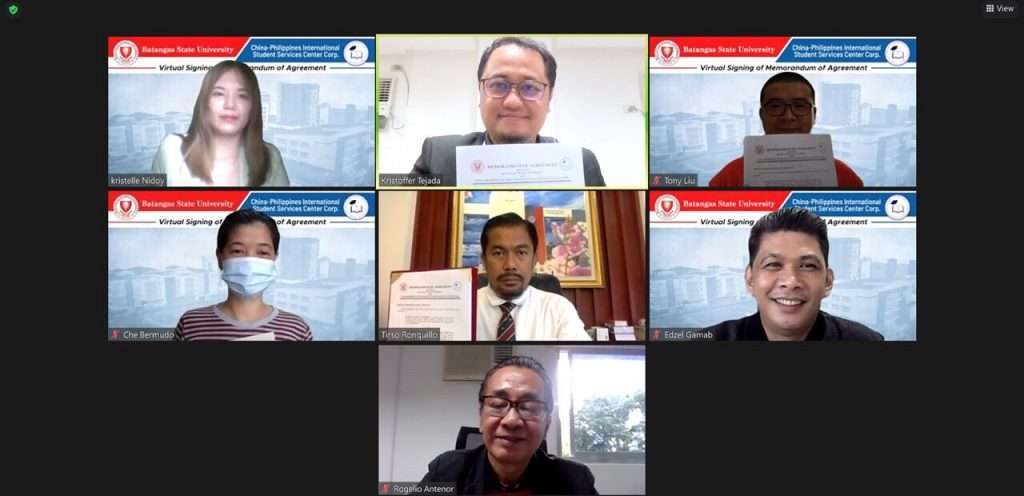
The Batangas State University further extends its reach on international student engagement as it recently forged two (2) new partnerships with Pathways Excellence Organization and China Philippines International Student Service Center Corp. (CPISSCC). The University inked a Memorandum of Agreement (MOA) with both parties through separate virtual signing ceremonies held via Zoom Conference meeting, May 10. The Pathways Excellence Organization chose BatStateU as one of its partners to serve its vision of introducing foreign students to selected universities in the Philippines with proven track record of integrity, professional and high standards, respect for quality of life and commitment to environmental protection. It endeavors to send students from Maldives, Nepal and India to study in the Philippines through BatStateU, under the University’s Engineering, Business Administration, Hotel and Restaurant Management, and Nursing programs, as well as graduate studies in Public and Business Administration. Qualified students who are still in their countries upon the start of the midterm classes AY 2020-2021 shall adapt to the flexible learning modality implemented by the University. These students will eventually be sent to the Philippines to attend regular face-to-face classes at BatStateU once the global situation goes back to normal. Virtual MOA signing between Batangas State University and Pathways Excellence Organization University President Dr. Tirso A. Ronquillo and Pathways Excellence Organization President Mr. Ravi Bikram Shah led the signing ceremonies. BatStateU Vice President for Development and External Affairs and ICT Dr. Kristoffer Conrad Tejada, Vice President for Academic Affairs Prof. Rogelio Antenor, External Affairs Office Director Engr. Edzel Gamab and Pathways Excellence Organization Executive Director Dr. Valentino Baac, served as witnesses. BatStateU, on its part, shall supervise and teach General Education subjects to the students under the program they enrolled in, as well as ensuring the preparedness of the faculty members assigned to teach the secialization courses of the programs, in terms of the approved lectures, modules and workbooks. As the University’s arm in ensuring the overall welfare of the international students, the External Affairs Office shall facilitate the registration and enrollment of the qualified new students, along with the processing of the student documentary requirements for their stay at the University. Virtual MOA signing between Batangas State University and China Philippines International Student Service Center Corp. Meanwhile, the virtual signing ceremony with CPISSCC was participated by BatStateU President Dr. Tirso A. Ronquillo, VP for Development and External Affairs and ICT Dr. Kristoffer Conrad Tejada, VP for Academic Affairs Prof. Rogelio Antenor, External Affairs Office Director Engr. Edzel Gamab, CPISSCC Manager Mr. Toni Liu, Head Administrative Officer Ms. Christelle Nidoy and Ms. Che Bermudo. The MOA with CPISSCC includes an academic collaboration, specifically for Chinese students, who wish to engage in the graduate programs offered by BatStateU. It also aims to develop educational cooperation in order to better train more talents in the global arena. Chinese students who will meet the educational standards of BatStateU in its graduate school programs will be allowed to apply through the assistance of CPISSCC. CPISSCC caters to Chinese and Filipino students with the aim of making contributions to the economy, culture and education of the Chinese and Filipinos, serving the public and giving back to the society. Both parties position themselves as active collaborators in order to promote knowledge sharing between the faculty members and the international students, as well as strengthening each other’s competencies through mutual sharing of knowledge.
BatStateU co-organizes international research symposium on environment and green chemistry
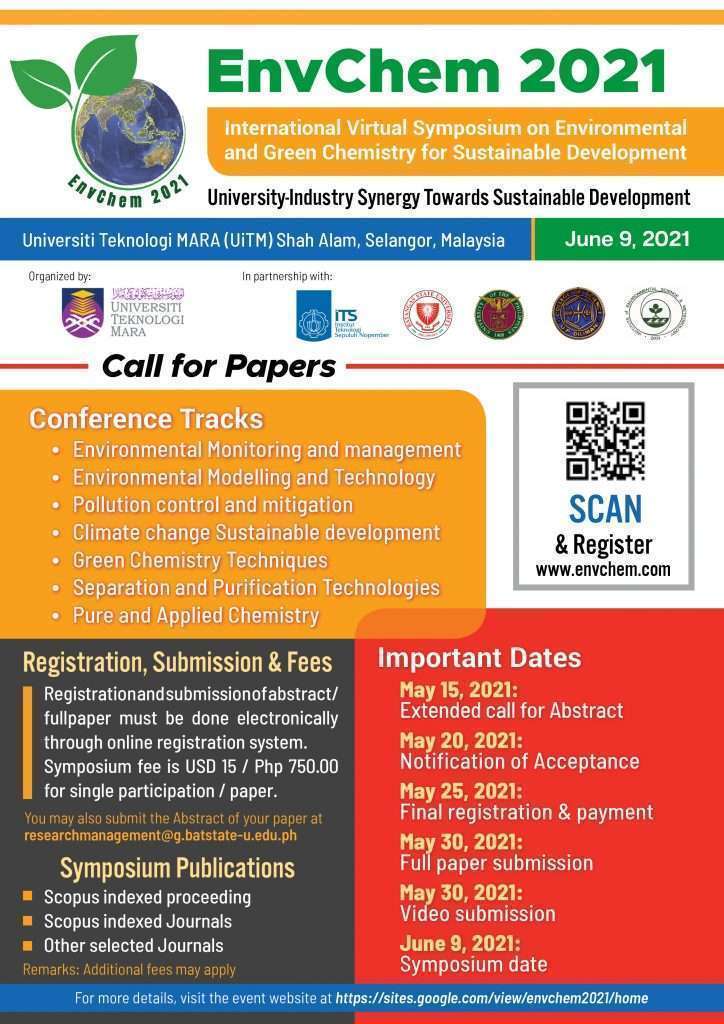
Batangas State University continues to strengthen its research internationalization agenda as it partners with the Universiti Teknologi MARA (UiTM) in Malaysia for the International Virtual Symposium on Environmental and Green Chemistry for Sustainable Development (EnvChem2021) to be held on June 9, 2021. UiTM is the largest institution of higher education in Malaysia based on physical infrastructure, faculty and staff, and student enrollment. It is also ranked as the 4th best university in Malaysia by Times Higher Education, and the 9th in the country based on GreenMetric World University rankings. Bannering the theme, “University-Industry Synergy Towards Sustainable Development,” EnvChem2021 aims to serve as a platform for international researches, industries, and students to share the latest research findings related to sustainability in environmental and green chemistry. It also seeks to foster an interdisciplinary discussion and networking to further enhance and enrich the knowledge of participants in an environment and green chemistry. BatStateU, as a co-organizer and an advocate of environmental sustainability research and initiatives, encourages educators, students, industry practitioners, and researchers to join the symposium. Relevant ideas and research findings will be discussed on the online platform using live streaming and pre-recorded video presentations. Selected papers will be published in Scopus-indexed journals and conference proceeding. Some of the university’s faculty on Chemical Engineering, and Environment and Sanitary Engineering, Chemistry, and Marine Biodiversity serve as Paper Reviewers and Session Chairs for the symposium. They shall screen papers for possible presentation under the following tracks: Environmental Monitoring and Management, Environmental Modelling and Technology, Pollution control and mitigation, Climate change Sustainable development, Green Chemistry Techniques, Separation and Purification Technologies, and Pure and Applied Chemistry. EnvChem 2021 is also co-organized by the Sepuluh Nopember Institute of Technology in Indonesia and the University of the Philippines – Diliman. More details regarding the registration, submission and fees, symposium publication and others can be accessed via the event website at https://sites.google.com/view/envchem2021/home.
BatStateU’s CTI wins Best Incubator Infrastructure Award from DOST-QBO Startup Incubator Awards
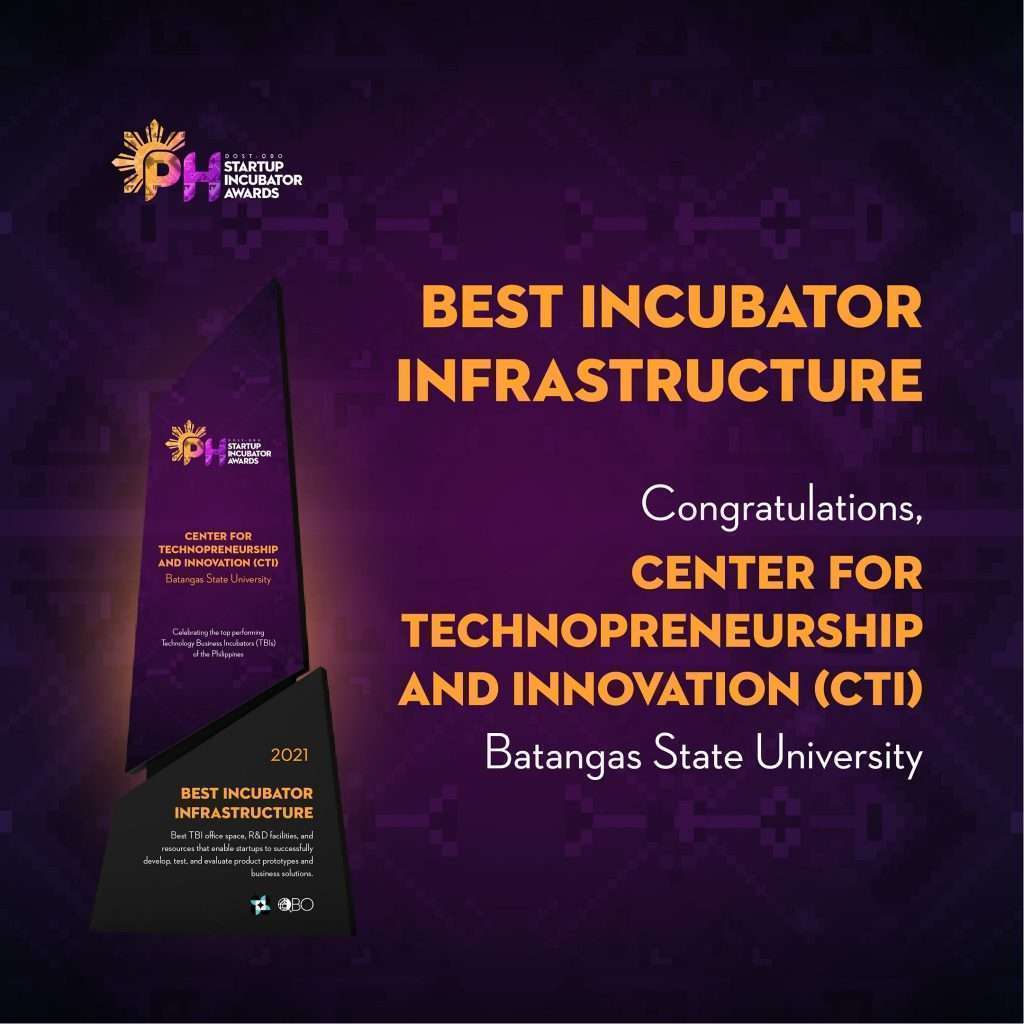
BATANGAS, April 23 – Batangas State University’s Center for Technopreneurship and Innovation (BatStateU CTI) wins the Best Incubator Infrastructure Award in the recently concluded PH Startup Incubator Awards, hosted by the Department of Science and Technology (DOST) and QBO Innovation Hub. The Best Incubator Infrastructure Award is given to the Technology Business Incubator (TBI) with the best facilities and resources, including the office space and research and development (R&D) facilities that help start-ups develop and test their product prototypes and services. This is one of the five awards included in the ‘Operational Excellence Awards’, given to the TBIs which excelled in their organizational structure, provided facilities, and in the attainment of their targets. The PH Startup Incubator Awards also served as the culminating activity of TBI 4.0 program, a two-year initiative funded by the Department of Science and Technology – Philippine Council for Industry, Energy and Emerging Technology Research and Development (DOST – PCIEERD) and led by the QBO Innovation Hub, that aims to elevate the capacity and services of the DOST supported TBIs in the Philippines by developing world-class TBIs and incubator managers, and increase the number of quality tech start-ups in the country as its end goal. Twelve (12) start-up TBIs hailing from the country’s leading universities participated in the TBI 4.0 program, where they develop different incubation programs, capacity development and co-incubation arrangements. The event also recognized these TBIs who helped excite the growth of the start-up economy and local ecosystems, as well as encouraging new start-ups to grow in the Philippines. The following TBIs were named as the winners during the awarding ceremony after showing exemplary performance in their fields of expertise and drive in levelling up their fulfillment as technology business incubators. Best Incubator Infrastructure – Center for Technopreneurship and Innovation (CTI) – Batangas State University Best Incubator Community Program – SIBOL Labs – University of the Philippines-Los Baños Best Incubator Startup Program – AIM-Dado Banatao Incubator – Asian Institute of Management Best Incubator Governance & Operations – UPSCALE Innovation Hub – University of the Philippines-Diliman Best Incubator Growth & Sustainability – Animo Labs – De La Salle University Extra Mile Incubator – Animo Labs – De La Salle University Rising Star Incubator – iDEYA- MSU Iligan Institute of Technology People’s Choice for Best Incubator Team – iDEYA – MSU Iligan Institute of Technology Grand Champion – UPSCALE Innovation Hub – University of the Philippines-Diliman DOST Secretary Fortunato Dela Pena in his speech, stressed the importance of investing to human capital, their innovative ideas, and their significant role to nation building. “Investment in human capital, expanding business incubation and acceleration efforts, [and] adoption of policies will lead to a better ecosystem for our start-ups and innovation,” he shared. QBO President Mr. Rene “Butch” Meily, in his message highlighted the role of the TBI 4.0 program on how it upgraded the Philippine start-up ecosystem, and how it can spark the potential of creating own start-ups in the Philippines. “Our hope is for the program to spread the idea of entrepreneurship all over the country,” he stressed. DOST PCIEERD Executive Director Dr. Enrico Paringit focused on the milestones and journey of the TBIs during the TBI 4.0 program. He also shared the DOST PCIEERD’s funding to the start up incubators on partner colleges and universities, to champion innovation and technopreneurship for the socio-economic development of the country. The BatStateU CTI was also announced as finalist for the Best Incubator Governance and Operations award and People’s Choice for Best Incubator Team. In a Facebook post, the BatStateU CTI expressed their warmest gratitude the DOST-PCIEERD, QBO Innovation Hub, and the BatStateU Administrators for their love, support and encouragement throughout the program. They also congratulated all the 11 other TBIs as they successfully graduated from the TBI 4.0 Program. “Everything we do is always anchored to our philosophy, ‘Para sa Bayan,’” they closed.